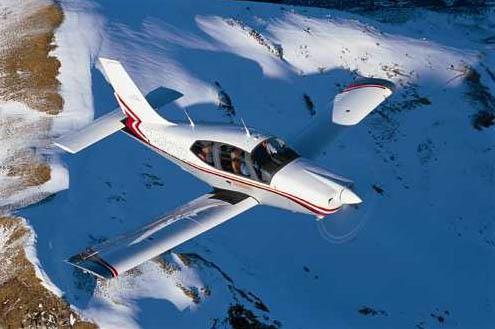
Socata TB20 Trinidad
This article describes the author's experience, since 2002, of operation of the Socata TB20GT aircraft. It was also written to help answer frequent questions asked by prospective TB20 buyers about type conversion issues, general operation, costs, and things to look out for.
PPL Training
This is just a brief bit of history to put things in perspective.
I started PPL training in 2000. The objective was to learn to fly so I could travel to far away places around Europe, and to see Europe from the air.
The PPL training scene at my local airport was somewhat behind the times... The first training plane was the PA38 Tomahawk which is a type most charitably described as an "exciting" plane to fly, but its condition was something else. The plastic had come off the yoke (the control column) many years before and one was holding bare metal rusted through years of students' sweat. After a rainy night there would be a puddle of water on the floor and the plane smelt like an old-style public telephone kiosk. During preflight fuel drain tests following a rainy night, it was not unusual to drain out several test beakers full of water before the fuel would start to come out - presumably due to perished filler cap seals. After about 20hrs of lessons, I left this school due to this and other less mentionable maintenance issues.
The next school operated Cessna 152s, in which I finished the UK/JAA PPL in May 2001. These were decrepit too but quite pleasant to fly and very easy to land due to ground effect being nearly absent.
The first thing which became obvious during PPL training was that the entire scene was very far removed from the reason I was learning to fly. Even if the training planes had been functionally capable of going somewhere "serious" (which they weren't, due to range) convincing passengers to come along would be a challenge. They were not unsafe in the sense that the wings would not fall off but their condition was poor at best and only hardened anoraks would want to travel in them regularly. More technically, the range of a Cessna 152 or a PA28-161 means that a flight from the UK to e.g. Prague would involve one or two fuel stops which makes it a gruelling all-day exercise - in each direction! Topping off a plane is not like dropping into a petrol station; in Europe one normally has to clear Customs even just for an airside-only fuel stop, so landings are generally to be avoided unless one actually wants to do something there.
It also became obvious, after the 2nd or 3rd cancelled lesson, that flying would be all but useless without an instrument capability. During one Oct-Dec period I booked every day to fly (i.e. 90 lessons) and due to rain and low cloud I got just 3 lessons in! Unfortunately nothing available for rental was suitable for "real" instrument flight. For instrument training, we used one plane (with a working VOR but a duff ADF) for VOR work, and another plane (with a duff VOR, duff DME, but a working ADF) for NDB work.
Therefore, I started looking around for planes to "get into long-term" (in a syndicate, or to buy outright) very soon after starting PPL training. This annoyed the various instructors, most of whom were ATPL hour builders who had never flown past the nearest crease in their charts and who knew next to nothing about different aircraft types. Naturally they preferred me to carry on renting what they had on offer - self fly hire is an important source of income to a flying school.
Aircraft Choice
This was done largely through a process of elimination of everything I did not want. After the PPL which took 66 hours, I converted to and rented PA28-160s and -180s in which I accumulated about 50 hours on various local flights, while looking around at various options. By this time, the requirements had been refined:
- no high wing (cannot see properly when doing steep turns)
- no single door (hard to get in/out, and difficult emergency escape - I had one of the two PA28 door locks jam once and that was enough)
- a modern design with 2 doors which is easy for everybody to get in and out of
- IFR avionics including a large screen GPS which is good for both VFR and IFR
- suitable for both hard runways and grass, 500m tarmac or 750m grass
- long range, suitable for the 400-600nm legs (with reserves for another 200+nm) typical in European touring
- actual aircraft less than 15 years old (aluminium airframes tend to need significant airframe parts after this point)
- an RMI with ADF and VOR needles (NDB approaches are a feature of European IFR and are not going to go away anytime soon)
- 130kt+ cruise
No suitable syndicates were found. The nearest I got to was a share in a Socata TB10, but it was quickly established that some of the IFR avionics were not functioning and the VFR-only members were unwilling to pay their share of fixing them; this turned out to be a common scenario in syndicates. The aircraft was also on the Private CofA which could not be used for training for the initial award of a License or a Rating (100% owners and some other cases excepted) which was no good as my immediate objective at the time was the IMC Rating. In retrospect, I could have tried forming a syndicate around an outright purchase (new or used) but with most of the people who trained with me having left flying almost immediately there was no obvious pool of potential shareholders to tap into.
Soon I moved to various outright purchase options. I did not at that time have the budget for anything brand new. The front runner, on specification and budget, was another used Socata TB10. The TB9 was no better than the PA28-160 (Warrior) on performance and was ruled out. However, very few TB10s found for sale were in good condition. After a great initial success in the early 1980s, the sales of the TB9/TB10 models had been poor (probably due to excessive pricing) and this resulted in most for-sale specimens being around 20 years old.
In early 2002 the budget situation improved and new purchase options were considered. The planes which met the technical requirements were a suprisingly short list:
Cirrus SR20 (SR22 not yet available)
Diamond DA40-180 (Diesel engines were not available at the time)
Socata TB20 (or possibly the TB21)

The first two were very recent designs while the TB range - while "ultra modern" by normal Cessna/Piper standards - dated back to ~ 1980. The TB20 was the only retractable gear aircraft in the lineup.
It was time to check out the hardware and meet up with some dealers...
The fibreglass Cirrus' chief innovation was the whole-aircraft parachute which would offer options for some classes of emergency e.g. structural failure, or an engine failure at night or over "impossible" terrain. However, it did not have an ADF or a DME; these were (and a DME still is) a legal requirement for IFR in controlled airspace in the UK, and a DME is required for IFR practically everywhere in Europe. When the Cirrus dealer was asked about this he replied "just ignore it; a GPS is much better" (which is true but not really the point) following which he turned around to talk to another customer who was not asking awkward questions. I did discover later that an ADF and DME could be retrofitted as a crude hack in the far right of the instrument panel, but if the dealer had this arrogant attitude before he got the money what would he be like afterwards? The build quality was not great either, with plenty of sharp edges around and poorly fitting trims. The Cirrus does not have an engine RPM lever - this was achieved with a rather crude mechanical device linking the throttle to the prop governor such that the engine runs at max RPM whenever the throttle is beyond a specific setting.
The Diamond DA40 was another very modern looking fibreglass plane but with the build quality of an IKEA kitchen with sharp edges and poorly fitting parts everywhere. It was also not capable of having the avionics I wanted; I did not consider a single Garmin 430 with its tiny screen adequate as the main GPS for VFR and IFR. The dealer didn't want to discuss avionics changes. The DA40 was an interesting aircraft which showed how the "sports VFR" future would look but it did not appear to be made for serious long range IFR.
Interesting reviews of the Cirrus and the Diamond are here and here. Please let me know if these links go dead. Update 5/2011: a TB20 review is here.
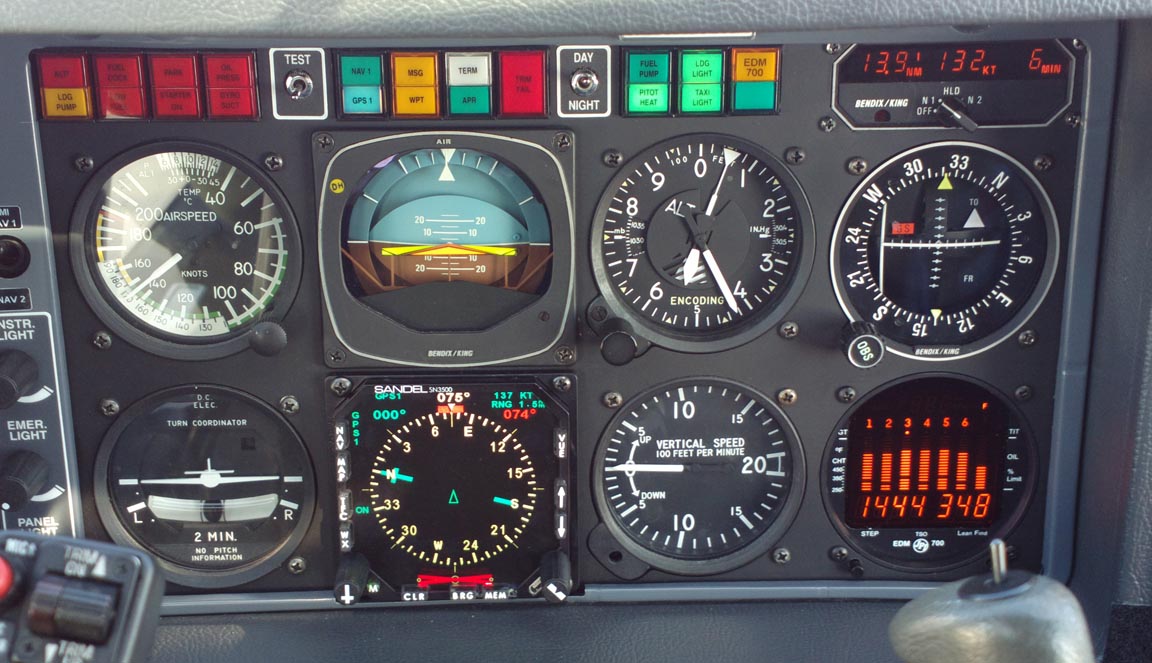
The Socata TB20 was very different. The build quality was very good and the contrast would have been obvious to any "engineer type". Construction was mostly aluminium, with a curved composite roof and a lot of car-type plastic (a little like a 1970s Renault - apparently they designed the interior) and cloth trim inside. It met the performance requirements. It came with a full set of IFR avionics, engine instruments, a fuel flow totaliser, all in a panel which was a masterpiece of ergonomic design.
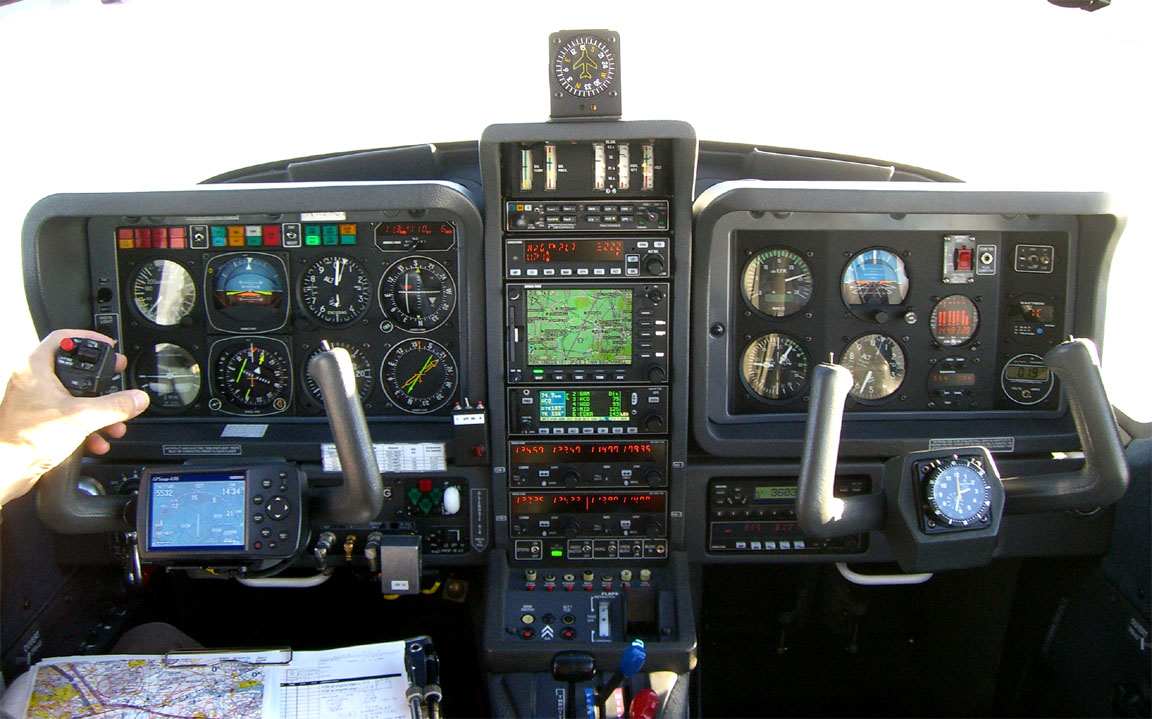
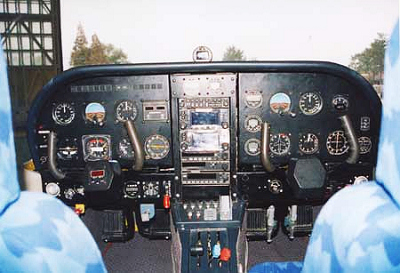
It also had TKS propeller de-ice, and a dealer who was willing to talk about options like the RMI. The above panel shows the RMI, and also a Garmin 496 which was installed in the LH yoke in later years. A full TKS system was installed in 2018.
Despite its 1970s design, the aircraft looks a lot more modern than most other GA types

The TB21 was considered too; it was another £60k or so, the delivery time was much longer, but unfortunately I picked up bogus information on the operating costs which - it was claimed - included an engine fund about 3x bigger than the TB20, plus the Annual costing a lot more due to mandatory inspections on the fitted oxygen system. The actual engine fund is around 2x of the TB20 but the fuel economy is very slightly worse at low operating altitudes due to the lower engine compression ratio, but improving at higher altitudes. The TB21 does have a higher maintenance cost than the TB20; in common with most turbocharged types I have never met an owner whose engine has made TBO without at least replacing some cracked cylinders, and the fitted oxygen system does indeed cost money at certain intervals.
Another option at the time was the Rockwell Commander 114/115 but it was way too expensive and, in retrospect, no more capable than a TB20/21 if comparing the same level of equipment e.g. full de-ice in both cases. I had also seen quite a few Commanders sitting on the ground for many months waiting for parts. Mooneys were ruled out due to being single door and with cramped cockpits even more difficult to get into than a PA28. The rather larger Bonanza A36 was ruled out on grounds of cost.
Considerable "due diligence" was done on Socata aircraft. All maintenance firms I spoke to reported no current problems with them, while warning me off many other types with recurring AD and parts availability issues. TB20 owners universally liked the aircraft - even if this is to be largely expected. Pilots with known long experience of many types also spoke very well of the TB20. Some negative views included high parts prices, long lead time on parts, and difficult access to wiring behind the car-like instrument panel.
The TB20 was available with two main avionics configurations: Garmin 430+530, or the Honeywell KLN94+KMD550. The latter option was chosen because of the much better VFR data on the KMD550 over anything from Garmin.
Today, the options - for the same mission profile and still working to the original specification - would have been suprisingly similar. The Cirrus SR22 would be most pilots' obvious choice for an IFR tourer - it is a current production aircraft with a seemingly assured future, employs very conventional technology, has no real reliability issues other than sporadic reports of glass-cockpit issues, and while its build quality is not to the TB20GT standard, it has much improved. Diamond, whose build quality has also improved since their early days, has been an extremely tempting option for anybody doing long distance European touring (avtur burning engines avoid the avgas availability problems around Europe) but sadly has just (2009) become a very questionable choice due to the bankrupcy of Thielert engines. There is also the Lancair/Cessna 400 but this is very new and they appear to have scrapped their novel electrically powered de-ice system; also its impressive headline performance figures are based on a high fuel flow and the TAS at FL250. Personally, I have recently flown the SR22 and the DA42 and would still prefer a good-condition 2002/2003 TB20GT or TB21GT for the same reasons as originally, plus I much prefer a yoke over a side- or centre-stick. The TB20 also feels a lot more solid and stable. I've also flown in the Cessna 400 which flies nicely and appears to be a solidly built aircraft, with a really well designed dual-redundant electrical system (2 alternators, 2 batteries, etc) and is quick, but the performance obviously comes only from fuel flow and its MPG turns out to be exactly identical to the TB20, at the same speed of e.g. 140kt IAS. There is no free lunch...
The TB20 - Initial Impressions
As it was the only realistic option which met the requirements, the TB20 was ordered without a test flight. I had about 120 hours total time at that point and what would a 120 hour pilot know anyway?
The aircraft was collected, with the factory pilot being the PIC, from the Socata facility at Le Bourget (this office has since been closed). A couple of obvious faults were found: the VSI was showing +400fpm on the ground, and the right-hand yoke PTT switch did not work. The VSI was adjusted by Socata but they could not fix the PTT switch, so we departed for the UK with me wondering how someone could deliver a £200k aircraft with such very obvious defects. As I was soon to learn, however, the world of aviation runs in its own parallel universe...
The aircraft flew very nicely. 150/160kt does not feel any different to the 100kt I was used to and the great stability of the TB20 was a revelation, as was the ease of doing 60 degree turns without losing altitude. Obviously it is not anything aerobatic but is great for having fun, drilling holes in clouds, etc.
There was a suprising level of high frequency vibration in the cockpit which did not seem right but I was assured this would go away once the engine had settled down. Being a competent mechanical engineer I did not believe this - mechanical imbalance issues are not going to get better.
After landing in the UK, the aircraft was left with the dealer who was to prepare it for placing on the UK register. I did some digging and quickly found that the Socata factory outlet (not a dealership as such) in the USA routinely finds that the Hartzell 3-blade props are way out of balance and they dynamically balance them, much to the annoyance of the French factory which did not like the extra costs. I said I would not accept the aircraft until the prop had been dynamically balanced. The dealer refused but after some weeks accepted they would not get paid and we flew off to a firm at Exeter for the propeller balancing; the cost was only about £200. The prop was found to be 1.5 IPS (inches per second) out which most specialists now describe as serious enough to ground an aircraft. The balanced prop was below 0.1 IPS and the result was very noticeable. The aircraft was accepted immediately and the final payment handed over on the return flight.
Insurance
There was never any issue getting insurance for the TB20 - even for "club use" which was the initial mode of operation, with some other pilots flying it as pilot in command.
However, I started off with a huge error: I did not realise that the UK GA insurance market is owned by about four and a half people, and I emailed around 30 brokers for a quote. These enquiries all ended up on the desks of approximately four underwriters (or brokers; many aviation brokers are actually re-selling business for other brokers, and they split the commission) and one simply cannot do this kind of thing in aviation. People who shop around are highly undesirable and this practice gets you banned from the market - for around 30 days.
Luckily I did this some weeks before the delivery of the aircraft so it didn't actually cause any problems but because most brokers would not touch me with a bargepole, I did pay way over the top for the first year's cover. One broker increased his quote by around 3x when he heard I asked others to quote; I discovered this when I tried to place the business.
Today, the UK GA insurance market is more or less owned by Haywards Aviation.
Converting to the TB20
I arranged for an instructor at my old flying school to do the "differences training" with me so I could fly the TB20 on my own.
This did not start well: when taxiing out, the nosewheel went into a 5" deep pothole (hidden in the grass and thus not visible) and the prop got dinged. Only the last 10mm was damaged, but it was a clear prop strike which required a full shock load inspection on the engine. Hartzell's rules for prop repair also mandated that the hub is scrapped if more than one blade needs to be removed for repair and this "interesting" policy meant that a new prop was hardly more expensive than repairing the existing one. The insurance company (Haywards was the final broker; I believe it was some Lloyds syndicate) were very good and paid out, but only after the first insurance broker in the line (a firm no longer trading) had handed over the initial premium which he was hoping to keep in his bank for as long as possible. They were especially generous considering that somebody decided to source a new prop via Socata in France, with a JAR-1 form, for £11,000, when the same prop with an equally acceptable FAA 8130-3 form was listed in the USA at $10,000. Clearly, the words "insurance job" have the same effect in aviation as in the motor trade! To preserve the 2 year warranty on the engine/prop, the shock load inspection was done by a Lycoming distributor.
The prop strike adventure cost about £20,000 (effectively a few k in lost no-claim discount over the next few years), grounded me for 8 weeks, and taught me a big lesson about the bizzare world of aviation: you (not the airport) are responsible for the condition of the airport and if you are not happy about something, stop the engine, get out and have a walk around. It's suprising what you sometimes find... Actually this is not the legal position; you can sue the airfield but they will fight it all the way because of the prededent it would create. Anyway, suing the airfield where you are based is not a great idea politically! I never sued anybody and neither did the insurer.
The differences training was completed with a different school and instructor and took about 15 hours. The new instructor was one of aviation's many great bar-room story-tellers: he claimed to have an ATPL but then he said that if too many planes tune into a particuIar VOR, the VOR stops working! But he was a good instructor who taught me some important stuff (e.g. what the trim wheel actually does: it sets the aircraft's speed).
So I think 15hrs is a generous measure of how long it takes to convert to the TB20... Flying it was never a problem; it is an extremely well designed plane which does exactly what it should in all circumstances and never bites. A reasonably technically savvy pilot could easily do the ab initio PPL in a TB20 and there are some training establishments in the Far East that do that, but the UK instruction scene is not well set up for it.
There are nevertheless a few things which take a fresh PPL holder a bit longer to get his head around, than flying e.g. a Cessna 152:
One is the different way of flying at 150kt rather than 100kt, and flying at say 5000ft rather than the 2000ft which many PPLs have been trained to do. The higher speed itself is irrelevant and barely noticeable, but if you arrive overhead the airfield at 5000ft and still doing 150kt, you are going to look a right plonker doing several orbits trying to get down, in full view of the restaurant and the plane spotters, at the same time as trying to lose some speed, and doing this without cooling the engine excessively quickly! It's no rocket science at all but one needs to think ahead - the descent may start gently 30nm out. I use the simple mental formula of 200fpm for every 1000ft to lose, if starting 10nm out. So, if 10nm out and 3000ft to lose, set -600fpm. And if starting 20nm out, set -300fpm.
Another is the need to embrace modern navigation. Navigating with the map, stopwatch, and compass is a tedious and highly error prone procedure which remains popular with a hard core of "traditional" pilots and these will find it harder to get used to something a bit faster. I had no problem with this since I discarded all PPL navigation training the day after the PPL skills test, and used GPS backed up with conventional radio navigation (VOR/NDB/DME) as the sole means of going everywhere. The benefit of this is that the workload of flying is a tiny fraction of what it is during training.
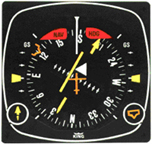
Another is the avionics... These were a mixture of standard old stuff like the ubiquitous 1982-model Bendix-King KCS55A slaved HSI
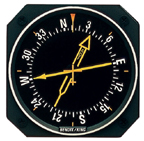
the KI-229 RMI (one needle pointing to the NDB and one to the VOR)
and "late 1990s" products from Bendix/King-Honeywell e.g. the KLN94 GPS
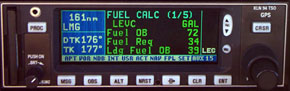
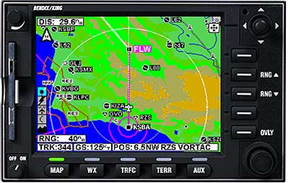
the KMD550 multifunction display which is really good for both VFR (where it shows European VRPs) and for IFR
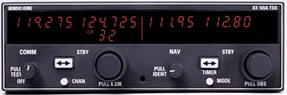
the KX155A radios
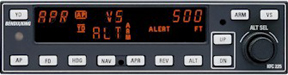
and the KFC225 autopilot
All of it should be easy for any private pilot to learn and most of it is fairly obvious (unlike the Garmin G1000 and similar products which need a serious ground course) but the GPS / HSI / autopilot usually involve their fair share of tricks. I did attend a Honeywell training course on the KLN94/KMD550 which was of some benefit but there are a lot of little operational details to pick up. No instructor I ever found knew much about it (the one who signed off my differences training didn't know how the HSI worked) so I worked things out while flying around the UK at 5000ft on the autopilot - not an ideal solution but the new engine (rebuilt yet again in the shock load inspection) needed many hours at high power to bed in the piston rings and other parts and this was a reasonable way to do that.
An example of a subtle operational trick is that when the KFC225 autopilot is switched to NAV (e.g. from HDG) it will not do a clear positive intercept of the GPS track unless - at the instant NAV is pressed - the HSI bar deviation is at least 3 divisions (3nm off track in the standard 5nm full-scale HSI mode; less in the 1nm or 0.3nm modes). In other words, if you are quite close to the GPS track when you press NAV, the autopilot will not be able to intercept the GPS track, and your best bet is to hack the intercept manually, using the HDG mode, and select NAV when on the GPS track (a slicker way is to use the HSI course pointer - once you know how it works with the autopilot - to get the plane to go where you want it). This one took ages to get to the bottom of, with Honeywell UK and USA, and the product documentation, denying any knowledge of it. If you fail to satisfy this rule, the autopilot turns onto the new track (actually onto the current HSI course pointer setting) immediately and then very slowly creeps towards the track line - absolutely not what is ever wanted. The way the HSI course pointer is used in different phases of flight also needs to be understood - in essence the CP tells the AP which track to fly, while the HSI bar deflection tells the AP which correction to make to stay on track. It's all basic stuff but there is suprisingly little operational knowledge of it on the UK training circuit.
It is sometimes debated whether a pilot should fully understand all the avionics installed. I believe he should, to the extent operationally necessary in the applicable airspace. For example there is no need to know the precise waypoint sequencing process on GPS approaches, since there aren't any of relevance in Europe, but not understanding how the fuel totaliser works would be almost as stupid as not understanding the emergency gear release procedure. The FAA apparently holds the same view - if you turn up for an FAA checkride, the examiner is entitled to ask you to demonstrate the operation of all installed avionics. The UK CAA doesn't do this and - at PPL level, anyway - items like the GPS get switched off, which I think is really stupid because it promotes ignorance of modern methods and keeps general aviation in the Dark Ages. You wouldn't drive a car unless you knew where all the switches were...
After another 20 hours or so I finished off the IMC Rating (a UK-only "limited-privilege IR") which had been started in the PA28s flown previously. The full IR soon became the objective but due to the size of the JAA IR ground school (14 ATP exams, since reduced to 7 if doing just the PPL/IR - some notes on the JAA IR process are here) I decided to do the FAA route. In fact, at the time, due to the new JAA system, the PPL/IR exam subset had temporarily ceased to exist and 14 exams (with a "reduced" checkride) were the only option. I did the FAA PPL in 2004 (UK), the FAA IR in 2006 (USA, due to lack of examiners in the UK) and the FAA CPL in 2007 (UK).
To get worldwide IFR privileges with the FAA IR, one needs a U.S. registered (N-reg) plane. This particular TB20 was originally built as an N-reg plane and if I had known at the outset about this stuff I would have left it on the N-reg. Unfortunately this was not discovered until years later (I was not revolving within a group of experienced pilots and nobody, least of all the flying schools, ever told me why so many European planes have "N" on the side) and the TB20 was transferred, at a considerable cost and hassle (but which would have been worse had it not met FAA requirements when built) to the N-reg at the expiry of the original 3 year CAA CofA. Comparing N-reg to G-reg, there is no single huge cost saving item (except perhaps the lack of the CAA 150hr check which costs almost as much as the Annual, but very few private pilots reach the 150hr mark within a year) but you get a collection of useful concessions, particularly a more straightforward certification regime for both minor and major modifications, and a better availability of freelance maintenance and certification engineers. The FAA regime is better for owners who actively manage their maintenance process; it offers more options and thus makes it easier to use the good people and it makes it easier to avoid the incompetents and the crooks. EASA Part M has been a gift for crooked maintenance companies, many of whom have misled their customers into paying for legally unnecessary "back to birth" certification reviews.
The principal downside of being on the N-reg is a constant cloud on the horizon of a possible action against foreign registered planes in Europe; this cloud takes various forms from one year to the next. In 2008 EASA published a proposal (see pages 159-161) which cleverly screws FAA licensed pilots, rather than screwing N-reg airframes which previous proposals tried to do. In my view it is unlikely that long term parking limits which previous national proposals (France, UK, 2004/05) tried to do will ever be introduced. Nothing much is likely to firm up on this situation until around 2012. I am updating the general N-reg article on the "EASA attack" situation.
"Living with" the TB20
The Good Stuff
1 year following the purchase I was doing well over 100 hours/year and flying long range flights into France and Spain; a year later I ventured to Sitia LGST at the far end of Crete. I did not have the IR at the time and these long trips were done under VFR; making use of "VMC on top VFR" whenever possible. Now, with an IR and always flying airways when going abroad, I shudder at some of the tricks which Italian ATCOs played on me and how I used to get around them. The aircraft performed flawlessly and has done so since - with the exception of occassional KFC225 autopilot failures.
From 2003 I have been doing regular long trips across Europe and am completely satisfied with the TB20. Some trip writeups can be found here and these show the typical IFR flight planning / weather strategies applicable to non de-iced aircraft (my TB20 has propeller de-ice only) with this level of performance. The normal procedure is to climb straight up into VMC and sit there for the entire enroute section, with not getting sunburnt being a bit of a challenge at times.
I have never regretted the purchase for a single moment. The TB20 has delivered exactly what I wanted. Later, in 2007, when I did the FAA CPL in it I discovered just how well designed it is. It flies the chandelle perfectly, on the edge of the stall buffet, with all control surfaces fully working.
The TB20 was originally operated as a zero equity group with several pilots but this was terminated after a few years and many difficulties which were not related to the aircraft!
Every aircraft is a compromise between cockpit cross-section (occupant space), fuel flow, cruise speed, stall speed (short field capability), max certified weight, fuel capacity (range) etc etc etc. Every different aircraft has been compromised to suit a specific perceived mission requirement. As far as IFR capable tourers go, the TB20 pushes the compromise about as far as anybody else has ever managed to do, delivering highest (in the class) occupant comfort, with a good short field capability (500m hard runway), with a good cruise speed (140kt IAS at 11.2GPH, just slightly lean of peak and about 60% power) and an exceptional range of around 1100nm to zero fuel which enables nonstop flights right across most of Europe. Plus good looks which are quite rare on the GA scene where most machines are post-WW2 designs revamped with a GPS or (very recently) a glass panel. The Cirrus SR22 (a much newer composite design) does not beat the TB20 on any parameter except the high power cruise speed but this is achieved at a much higher fuel flow rate - presumably because the SR22 sacrifices a lot of power in dragging along its fixed gear.
Some experiments on this trip suggest that at FL100 and about 5% under MTOW one can achieve 140kt TAS (2200rpm, 9.0GPH) which gives an endurance of 9.5 hours and 1300nm zero-fuel range. FL200 was also easily reached, and the TAS up there is also 140kt (2575rpm, 100F ROP). This capability was confirmed again on this long trip. However, in Europe, the biggest constraint on the maximum range is usually the availability of airports and alternates which have Avgas and Customs.
A typical TB20GT loaded up with all the possible factory fit avionics options has a 500kg payload which means ~ 240kg of passengers and junk, with full fuel. Together with the full-fuel range, this is simply amazing. To date, I have had to depart with less than full fuel on just one occassion when I had three large male passengers.
The TB20GT avionics (see the panel pic at the start of this article) were very well chosen and very well laid out. And they work. The KFC225 autopilot, when it works, delivers excellent performance, including in turbulence.
The max demonstrated crosswind limit of 25kt is also very generous. To date, not one flight has been cancelled due to wind over the limit, which is another amazing statistic when compared to the traditional training types. The TB20 is easy to land in crosswinds and I never had the slightest problem or suprise with it. This is not to say every landing is perfect - far from it - but the training link suspension delivers very acceptable landings most of the time. No special procedures are required and one should always land with full landing flap as per the handbook. I never land with half (takeoff) flap because that disables one of the two gear-not-down warnings (throttle being below a certain setting is the other one, but that won't be of much value if one is landing against a strong wind).
The high wing loading results in the best ride in the class in turbulence. This is particularly important on a long range touring aircraft.
Of around 2000 TBs made, there are just three known in-flight structural failures of a TB aircraft (TB21 PH-UBG, N654GT and N104F - all of them in thunderstorms) which is probably unique and is a testimony to the wing spar which is machined from a single solid piece of aluminium (on large CNC machines used for Airbus airframe parts) and looks strong enough to hold up a brick wall.
The TB20 is certified for flight into icing conditions if fitted with the full TKS system - the only de-ice option - but only on a G-reg. On the N-reg it isn't, because the FAA requires additional equipment e.g. two alternators for which there is no easy approval path. This is a rare example where the UK version is more "legally" capable than the US version. Another one is a 20,000 ceiling on a G-reg which mysteriously reduces to 18,000ft under N-reg... I have found the prop-only TKS to be highly effective in keeping the prop clear of ice and the spray also keeps the whole front window ice-free, even when there is a substantial accumulation on the wings. This is a relatively cheap option (of the order of $4,000 whereas the full system is some $50,000) which is well worth the cost. I have found, on many occassions, that ~ 3mm of mixed (clear+rime) ice all over the leading edge has less than 2kt impact on the airspeed, and about 5mm of mixed ice reduces speed by ~ 5kt, which suggests that other pilots' reports of substantial speed loss in this type of light icing were in fact caused by an iced-up prop.
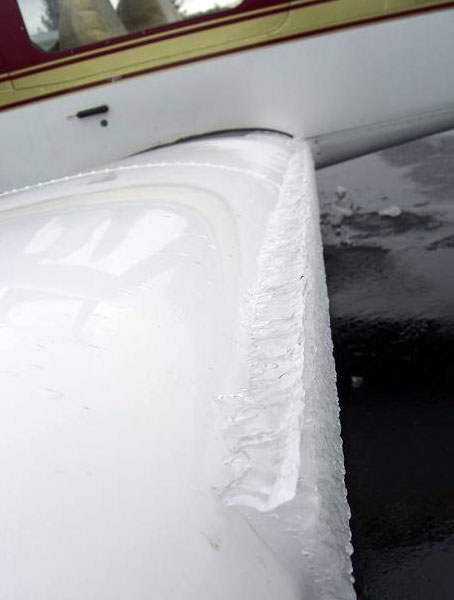
Some pilots have pushed it a lot further... This photo
originates from a TB20 pilot in the USA who nearly killed himself flying at
15000ft over mountains without oxygen, and then wrote about it in great detail.
I happen to know that with this much (~ 30mm) rough ice the aircraft will do
only about 100kt at full power at low altitude (e.g. 4000ft), there will be
heavy buffet felt through the controls, and it will not climb at all. Interestingly,
the wings tend to get the "wing leading edge conforming" ice profile
shown in the photo, but by that time the elevator will also be iced up and that
does tend to develop the classical horn formation, which is more hazardous.
Obviously, these are emergency situations which generally only a poor IFR strategy
would get you into in the first place, and you need to keep your speed up, which
means a gradual descent... which is OK if there is warm air well above the MSA
 If one is forced to
land with this much ice then a flapless landing on a very long runway would
be recommended.
If one is forced to
land with this much ice then a flapless landing on a very long runway would
be recommended.
The TKS fluid can be purchased (UK) from e.g. Silmid as Aeroshell 07. It is very expensive; around £200 including delivery for a 20 litre drum which is irrelevant on the prop-only system but potentially an issue on the full system which can use up the whole lot on one flight - if one was trapped in IMC. Also, in Europe, one has the same issues as with oxygen in that hardly any airports provide a top-up facility, and most owners keep a drum back in their hangar. On the prop-only system I have, it is topped off via a cover next to the oil dipstick cover and is easily transferred using small bottles. The prop-only system also has an option of using a glycol/water mixture which is much cheaper than the proper TKS fluid.
On long trips I carry a 2 litre topup bottle of the TKS fluid, which is just the right amount for completely refilling the 2 litre prop TKS fluid reservoir. For safe leak-proof carriage of this stuff I use HDPE (high density polypropylene) 2 litre bottles which can be bought cheaply from laboratory suppliers e.g. here (local copy). These bottles can also be used to carry IPA (isopropyl alcohol) which can be added into avgas (in accordance with Socata guidelines); I tend to add about 0.5%, poured in during or immediately before a refuel to get the stuff to mix in properly. There is no known case of a TB20 getting in-flight fuel icing, and I have flown down to -30C without it, but IPA is very cheap; it can be purchased on Ebay, etc. The downside of IPA is that on a very long trip one has to carry rather a lot of it, which is why some people use the more hazardous (and carcinogenic) additives like Prist which can be added in much smaller amounts.
Despite the prop strike early on, the 3-blade prop clearance is about 8 inches (200mm); about 20mm less with the 2-blade prop, and this is as good as it gets on IFR tourers. But, the nose suspension travel is about 3 inches (75mm) which means that driving into a 5 inch (125mm) deep hole will result in a prop strike. One needs to be quite careful; many grass airfields (especially in the UK) are poorly maintained and there is a general culture in GA that the airfield has no responsibility, and prop strikes are much more common than most would admit.
The TB20 is fine to operate from both grass and tarmac. The handbook contains only hard runway distances and short dry grass is perhaps another 20-30%. With long wet grass, all bets are off, of course. However, as with any aircraft, the more grass you do the more dirty it will get and this will eventually translate into a poorer general condition. Equally with any aircraft, a takeoff from grass long enough to reach the prop arc will cover the entire aircraft with fine grass cuttings which stick and are very hard to wash off. I do grass if I have to go there for a pressing reason but normally avoid it because grass airfields also tend to have poor taxiways.
The TB20 is easy to land - if the speed is right - and the trailing link gear provides lots of suspension travel. Out of hundreds of landings, I have not once had to go-around due to a botched landing and have never done a landing which was unacceptably hard. Go arounds due to traffic, etc, are not uncommon of course and the plane has loads of power to get climbing again even with landing flap down.
The Not So Good Stuff
Initially I found it difficult to plan longer trips due to regular avionics failures. These ranged from relative trivia like the RPM indicator (failed twice), the ADF display not auto dimming with ambient light, the yoke clock and the battery master relay (both changed several times) to more alarming events like the KFC225 autopilot (several failures of both the servos and the computer, with the latter suddenly deciding to climb at +2000ft/min). Apart from the KFC225 (which contains some known design defects) these failures appeared to be randomly spread among the equipment. The EDM700 engine monitor was also changed because the unit fitted was an old one with duff firmware on which the data download did not work. The KI-229 RMI packed up more than once, as did the 400Hz inverter driving it. In terms of end user list prices, the value of the equipment changed under the warranty must have come to £50k-£100k which made the 2 year warranty (which was obviously heavily paid for in the price of the aircraft) seem well worthwhile.
Most of the items changed were generally good 1990's-era avionics, without a reputation for poor reliability. The only explanation I can think of is that the aircraft had been built with a pile of used avionics which had been returned from the field with non-obvious or intermittent faults and which were found to be OK when bench tested. This was apparent from the date codes on the instruments which were mostly 1999-2000 dated i.e. 2-3 years old when installed.
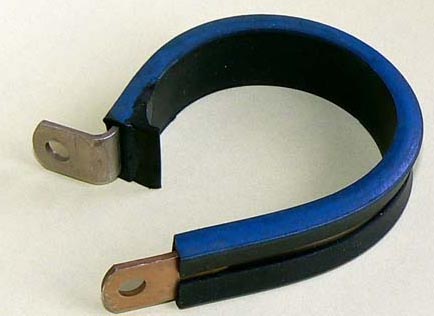
I think I was very unlucky because most other TB owners have not reported such a high degree of early equipment failures - even allowing for the fact that most owners don't advertise problems in case they want to sell the aircraft later! But it's easily done. In aviation, in general terms, an item can be tagged as New, Overhauled, or Unserviceable. It follows that if an item is functioning but has never been formally overhauled (and many items have no approved overhaul procedure anyway) it can be regarded as New. It is of course morally unacceptable to fit anything other than brand new unused items to a brand new aircraft, but aviation does not work like a normal business and the avionics shop procedures, operating under the company certification regime, mean that the line between "new" and "used" can be blurred. I recently purchased, for another aviation related project, a £3 P-clip from one of UK's best known aviation outlets and when examining the sheaf of oil-stained documents accompanying it, it turned out to have been made in 1968 and had worked its way around the stores of several long-defunct airlines! Enquiries revealed this practice is commonplace and results from the tight certification regime under which nobody has the authority to question the status of an item which is certified as OK. In avionics particularly, the situation is compounded by a common disreputable practice: most manufacturers will fight till death to avoid replacing an instrument returned to them with a defect which does not show up in their prescribed bench tests - regardless of how much evidence of the fault (photographic, engineer/witness statements, etc) is presented to them. I always carry a cheap little camera in the aircraft, and because most of my autopilot failures happened on long (holiday) trips, these got captured on video also.
It is likely that at the time this aircraft was being built, late 2001, Socata had a good reason to recycle its stock of old parts: they had already made the internal decision to wind down production of the TB series.
In the end these failures cost Socata (France) dearly because - for the main avionics - the dealer simply bought new replacement items from a local aviation parts outlet, and billed the cost (plus labour) to Socata.
There was an irritating issue with the Shadin fuel totaliser, partly due to a firmware bug (which resulted in a couple of ineffective replacements of the instrument, until I tracked it down a year later) and partly due to an incorrectly located fuel flow transducer. It would be 6 years, out of warranty, and long after everybody connected with Socata washed their hands of it, before I finally managed to fix the transducer issue.
The avionics issues settled down within the first year or so - apart from the KFC225 which continued to pack up regularly and on which Honeywell offered me an indefinite warranty, valid all the time it keeps packing up. They later washed their hands of this warranty when the person who gave it to me left the company...
One funny issue was that the WX500 stormscope display did not rotate according to aircraft heading. This made the stormscope effectively useless. I made some enquiries around the internet and eventually came across a pilot who bought the very first TB20GT which Socata used for certification, and he led me to a solution. I later discovered that Socata dealers had been "implementing" this mod unofficially. It takes about 5 minutes... One reason given was that the DGAC decided that if the stormscope rotated with the heading, the pilot might use it to avoid thunderstorms, and they didn't like it being used for that! Another reason given was as per that document, but that is spurious since the equipment is certified to be connected up in that way and this is universally done elsewhere.
A very important point is that nothing of significance made by Socata has ever gone wrong i.e. there were no airframe issues. The avionics/electrical issues could easily have happened on e.g. a Cessna 182 from the same era. Fortunately !! there were no engine issues; the 1960s Lycoming IO-540 just keeps going round and round...
Aircraft ownership involves a steep learning curve. The two major items are: learning who you can trust with regard to maintenance, and discovering the airfield political / gossip circuit in which - in the UK, anyway - malicious rumour travels faster than the aircraft.
Maintenance was an issue on occassions. Sometimes I felt that more damage was done during clumsy maintenance than through any operations. The TB20 was originally placed on the G-reg and - as with all new G-reg planes - was on the Transport CofA. This involved mandatory 50hr checks done by an approved (JAR145 in this case, company no longer trading) maintenance company which at £500-£600 each were a substantial portion of the operating cost - as much as the engine fund! They used power screwdrivers without a torque stop and regularly chewed up external screws. I used to replace the damaged screws myself, from a Socata screw kit. Lubrication - perhaps the most important aspect of aircraft maintenance - was frequently overlooked or done with an aerosol can; luckily I managed to get pro-active on this around the 6 year point which was not too late. However, GA maintenance is a minefield everywhere and this is nothing to do with the Socata aircraft model.
Unfortunately, the relationship between the Socata factory and the dealer (Air Touring) was often rocky, and Socata refused to reimburse them for certain items which were done by Air Touring within the 2 year warranty. In my case, it was an aileron gimbal joint SB. Air Touring consequently asked the owner to pay for it and some owners (myself included) understandably refused! I would never have dreamed of pulling such a stunt over one of my customers.... This is an example where a warranty - even though normally hugely valuable - carries the risk of destroying your relationship with the dealer, leaving you to scrape around looking for other companies to do any required work. As a result of this dispute, following the end of the warranty period, I was unable to take the aircraft to Air Touring for any maintenance. I made some enquiries with Socata afterwards to find out what happened and apparently the gimbal joint SB was a non-mandatory SB and only mandatory SBs were covered by warranty... And who decides whether an SB is "mandatory" or not? The factory, of course... In the end, Air Touring went bust in July 2009.
The airfield political scene needs to be learnt fast and without upsetting anybody (whose services one may need) based at one's own airfield. One soon discovers that at some airfields most of the based pilots fly away to get their maintenance done. This is not necessarily because the based company is no good - this procedure merely ensures that the based company will always be there in case you really need them because since you never used them you never acquired the opportunity to have a dispute with them!
End of Production
Socata officially announced the end of the TB range around 2005, with a public announcement saying that they would restart when market / exchange rate conditions improved, with a manufacturing facility in a lower cost location than France. This was not a clever move; a much smarter procedure would have been to build one final large batch and then quote progressively longer delivery times, which would give them time to sort out a new facility without destroying the credibility of the product line and causing many owners to overtly or covertly try to offload their plane before its market value plummets. However, I know from my own business that they are right about French labour costs and working practices. If you are going to make something in France, and make money on it, it needs to be really expensive (like the $3M TBM850).
However it appears (partly from date codes on various parts purchased from Socata) that an internal decision was made to stop TB production much earlier; most likely around 2001, and the whole operation including spare parts stock were run down after that, with extensive re-cycling of old stock. The latest TBs on the market are likely to be "2003" with an actual assembly date in 2002, and built largely from parts from 1999-2001.
Over the past few years it has emerged that Socata has been looking at alternative manufacturing locations / joint ventures. The first was to be in Romania (some kind of offset deal; this fell through c. 2006). The second was in New Zealand; this came to light when Alpha Aviation there went bust and the Socata connection became public. More recently this has appeared; the same investor has been connected with Epic Aircraft. So the TB piston line is not officially dead; Socata may still be talking to people.
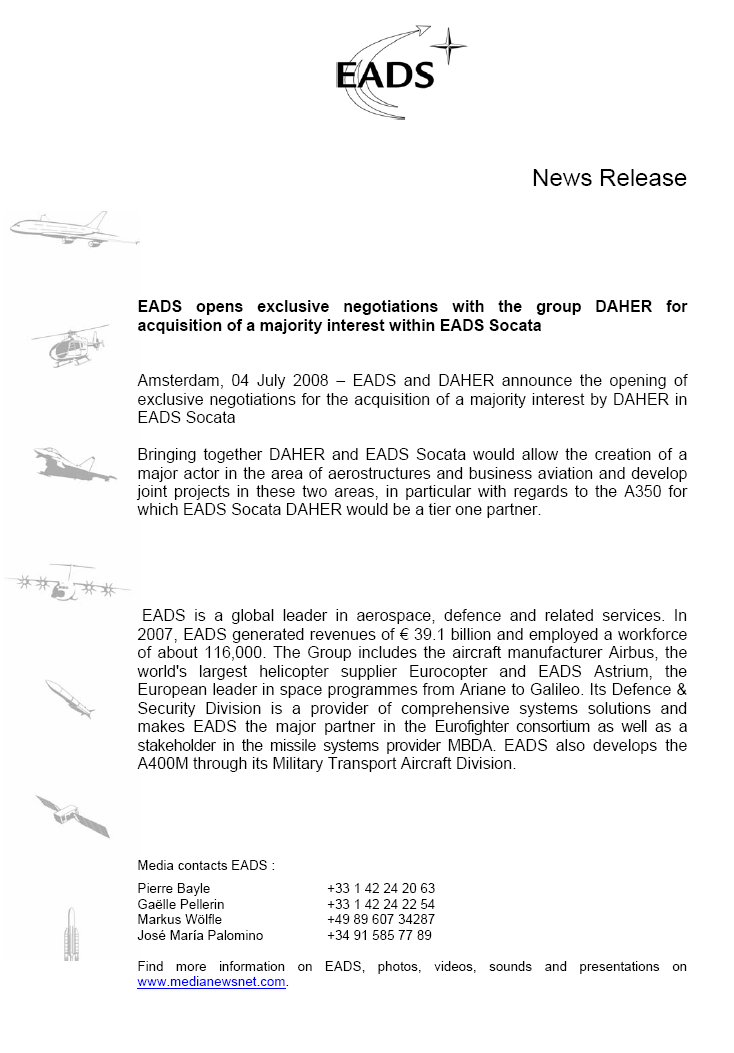
In late 2008 Socata as a whole (TB, TBM and all their other Airbus etc subcontract business) was sold to Daher - 1 2 3
It's obvious that with the major market being the USA, and with the most expensive bits (engine and avionics) coming from the USA, the logical place to build the aircraft would be either the USA or a low labour cost (but skilled) location that operates in US$.
However, a re-entry into the single engine piston IFR market will not be easy, with Cirrus so well established in the USA, and the European market virtually mandating an avtur burning (diesel) engine but the only remotely proven contender (Thielert) went bust a few years ago (trading again in 2012/2013). Any new TB aircraft would likely be a TB20-type retractable with a glass cockpit, lots of cosmetic changes, and avgas/diesel engine options. A TB fitted with what appeared to be the SMA diesel engine was seen test flying in the UK c. 2004, and an SMA engined TB20 definitely exists in France - these two may have been the same aircraft. According to someone who spoke to the development team, severe vibration problems were encountered with the diesel engine. A 2004 leaflet on a SMA-diesel TB is here.
A couple of visits to the factory at Tarbes reveal a bunch of people who are exceedingly polite and courteous, and always willing to discuss a TBM850 or a used TBM700 sale, but there is no sign of the dynamism which must have been present in the 1970s, and which must have returned for a brief burst of activity in the late 1990s when they were doing the "GT" upgrade. The factory is well equipped, with special tooling having been made for seemingly every last bracket. A lot of use is made of CNC facilities which are in place for machining large Airbus components; the benefit of this is clear on the solid wing spar which is machined from one piece of aluminium.
Myself, I would put the chances of TB production restarting, after the long break, at around zero. This is not a problem for anybody wanting to buy a nice TB20 because there is a regular (if tight) supply of the GTs on the used market, and a hangared 2002/2003 sample should be almost as good as new. If the crank swap needs doing, this knocks £10k-£15k off the price and offers a great opportunity to open up the engine and make sure it is OK. At the other end of the scale there are some very old TB20s around for under £40k; these would make an interesting "aircraft project" where you spend perhaps £120k rebuilding from ground up, to end up with a virtually brand new aircraft. This will not be worth doing if there is significant corrosion, however, and it would be a lot easier to just buy a GT model.
My view is that Socata is never likely to stop making TB parts. Like most aircraft spare parts operations, it is a highly lucrative profit centre. One of the reasons that spares is such a good business is that the company is certified to generate the original aviation paperwork from nothing. In crude terms, this means they could pop along to a shop and buy a packet of 100 screws for £0.01 each, "inspect" them, and resell each of them with an 8130-3 or EASA-1 form for £5.00 each. In fact they should obtain a traceability document from the screw supplier but the principle stands - it is a very high gross margin operation. And anything manufactured in-house (true for most airframe parts) can have its paperwork generated from fresh air. This obviously means that anybody who restarts TB production will want the parts operation as part of the package. A good example of this is Piper whose piston sales are poor (14 Archers sold worldwide in 2007) and which is reduced to an extensive Spares operation servicing the enormous worldwide Piper fleet; occasionally they sell some Meridian turboprops.
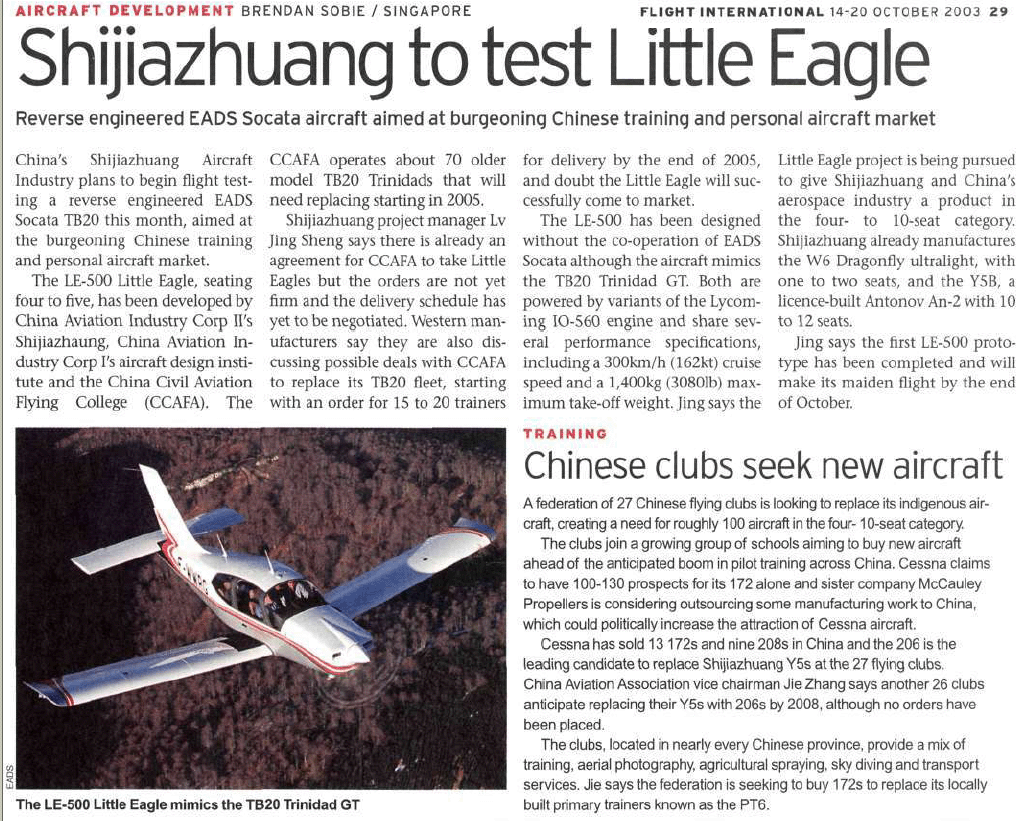
Update 12/2009: During 2003 it emerged that China developed an aircraft very similar to the TB20, without any official deal with Socata. The resulting aircraft was sold internally but external deliveries were made commencing 2009. Some links are here here (local copy) here (local copy) here (local copy) here.
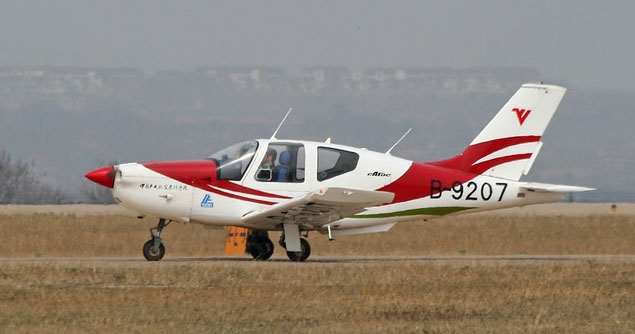
The Chinese aircraft is very obviously similar to the TB20, and may be identical in the major component dimensions (which would make the FAR23 certification process a foregone conclusion) but also it differs in many small details. The price mentioned in some of the articles is also not anywhere near competitive; the figures (in the links above) of $322k to $424k are merely close to Socata's list prices for the TB20 and TB21 respectively at close of production in 2002. The aircraft also appears to be of poor quality, and is certainly poorly equipped (panel) for the era.
Obviously, the question of copyright infringement arises... Interestingly, the manufacturer's current website (local copy) does state that the design is free of intellectual property issues; presumably they must have been asked this question by potential customers. Nevertheless this copy-job is going to put a damper on any attempts to restart TB production, because the major emerging markets (China, India) will probably accept this product.
Socata is not the only western light aircraft maker to attract the attention of copiers. Cirrus is getting it too from Korea.
High Socata parts prices, difficult maintenance, etc?
When compared to the much more common GA aircraft types, there is some truth in this but not to a degree which is significant overall - unless the airframe is old; say 20+ years. However the origin of the widespread rumours (usual rubbish written on some pilot forums aside) is not hard to work out.
The problem is partly in the way Socata have set up their parts supply operation, and partly in the reduced familiarity with Socata aircraft within the maintenance scene.
Socata have allocated a special part number (usually starting with Z00... TB10... TB20... TB30...) to every single component on the aircraft. Their parts catalogue suppresses (for the most part) any mention of original equipment manufacturer (OEM) part numbers. In the spirit of how aviation is supposed to work, your dealer is supposed to look after your every need. He in turn is supposed to source everything from the factory, using the factory part numbers.
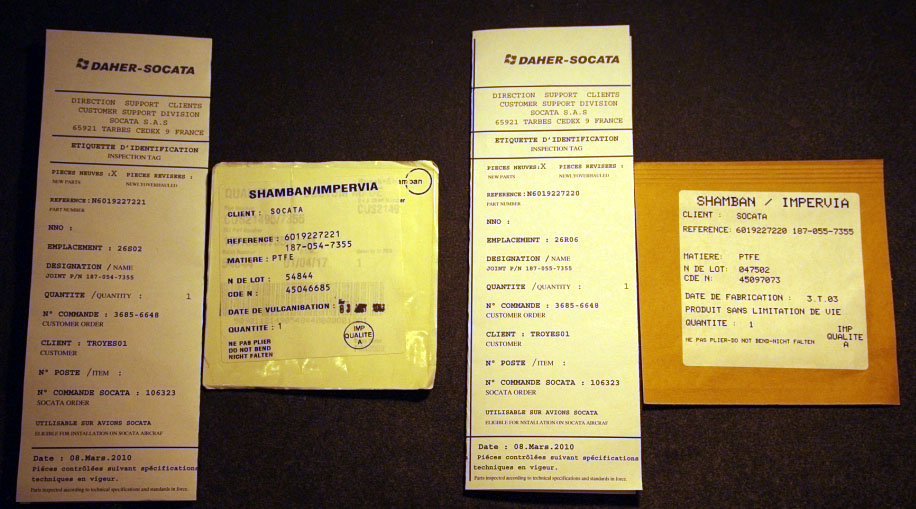
This may be done by some maintenance firms but anybody who has been in aircraft maintenance for any time will know that e.g. the magneto gasket is actually a dead common Lycoming P/N XXXXX and if purchased from a normal aviation parts supplier may cost £5 whereas the Socata price might be £20 or more. Since Socata make only the airframe and some other oddball parts (e.g. the exhaust system) this means that very little of what is required during routine maintenance needs to be purchased from Socata! On an old aircraft (say 20+ years) significant airframe parts may be needed and the maintenance cost can then go way up; however this is the case for any aircraft as airframe parts are universally priced at silly levels. The exception to the foregoing is when a dealer is doing a warranty job; in that case, for political reasons, he may source parts from the factory even though they are massively over-priced, because the cost will be claimed back anyway, and the factory is always happy to turn over its stock which they purchased or fabricated at low prices anyway. For the TB range, Socata are sitting on a pile of old stock going back to 1999/2000, this would not matter on airframe parts which have no shelf life issues but can matter on electrical items like starter motors - as I discovered to my cost.
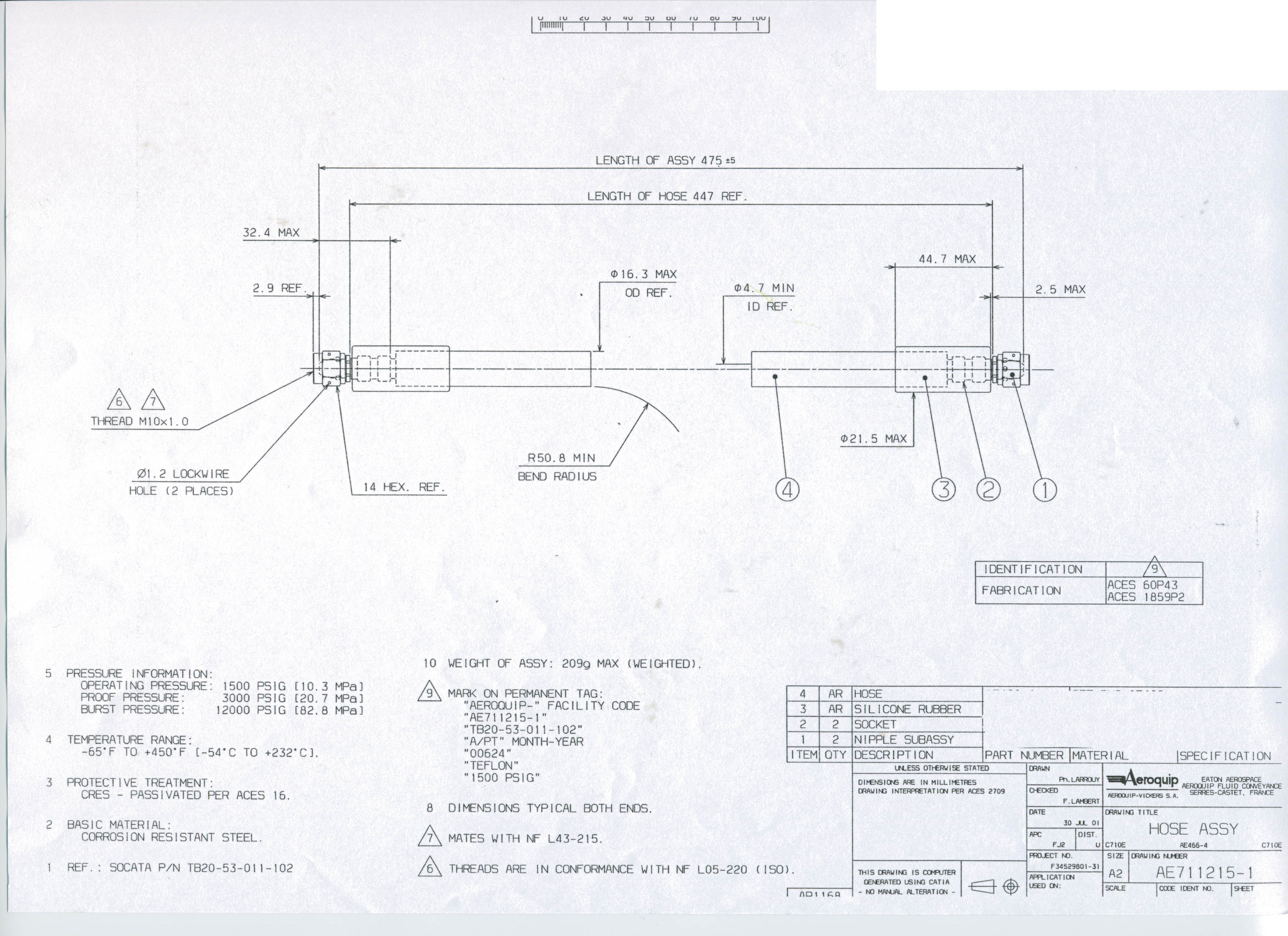
While the small parts generally used during the Annual cost little, while some items do have eye watering prices e.g. the exhaust system is around 15k euros (2023). The GT range is claimed to have Inconol/Inconel exhausts which would last for many years, but this turns out to be false. While most of the engine hoses use standard U.S. fittings and can be made up in Teflon (most Teflon hoses on a TB20 are not life limited; the rest have a 10 year life; details in Section 5 of the Maintenance Manual) and to the highest possible specs for around £50 each, some of them use rare ISO-thread fittings and cost £400 each from Socata (£180 if you can find a hose shop willing to track down the fittings). The fitted oxygen cylinder in a TB21 has recently gone up to about $8000... This is an area where a pro-active owner of an older aircraft can save large amounts of money, by locating the real manufacturer who will hopefully sell the part with the proper aviation paperwork. The same argument ("knowledge is power") would apply to a Cessna etc but to a lesser degree because there is more knowledge around for those.
Looking at the parts for which I have traced the original manufacturers, it appears that Socata mark up their costs by 3x (for pricey parts e.g. landing gear microswitches) to 10x (for small parts e.g. o-rings). This is not unusual in the aviation trade, and any solution requires the tracing of the original manufacturer and obtaining the identical part, with adequate documentation as required by the local certification regime.
Socata part pricing is rising quite rapidly. There has been a general ~20% a year rise across the board, every year, with some spectacular exceptions like the N7284526357 fuel selector filter element which is now (8/2023) 2500 euros! Most EASA maintenance companies do not accept that this filter, which is stainless steel and with an indefinite life, could be run on-condition. This is all the more reason to do the maintenance properly!
The long-time UK dealer - Air Touring - had a long running policy of selling
Socata parts at inflated prices. This led to many owners purchasing from other
Socata dealers around Europe. However, such sourcing did not have Socata (France)
support because they tried to support their dealers' geographical franchises;
this didn't matter on small parts but was a problem where factory help was needed.
Such a "sole agent" policy had been illegal in the EU for years but
this is aviation In
later years Air Touring's pricing had fallen into line and I found that prices
became uniform across the European dealers. Air Touring went bust in 2009. I
now buy parts from various Socata dealers in Europe. Troyes Aviation in France
is popular with many pilots although I have found they won't provide assistance
with part numbers. It is not possible for European owners to purchase parts
from Socata USA but obviously one can do it covertly, fronted via a contact
in the USA. Now, 2012, Socata USA do not even reply to emails from Europe...
Australian residents can purchase directly from the factory using MySocata. They can also order directly from Socata USA. This arrangement seems to have come in because Australia lost all Socata dealer support after the last dealer there went bust c. 2010.
A list of Socata parts distributors is here local copy. I normally buy parts via Troyes Aviation in France.
Long part lead time is largely a myth. The longest I have come across (another owner) was about 3 months and this is likely only following a major accident repair. However, a lot of issues result from the Tarbes factory / parts department where some people work a good deal harder than others.
There are no major "tricky job" issues on TBs relative to any other common type. It is true that it takes more time to get behind the centre section of the Socata instrument panel than on a simple plane whose entire panel either comes right off or tilts forward. In this respect, one pays a slight price for the very nice cockpit layout - most modern cars are an absolute pig to work on for this reason. Access to the two left and right panels is excellent, due to the two large external inspection panels at the base of the windscreen. One notable item are the exhaust clamps which contain an Inconol/Inconel gas sealing strip whose ends need to be carefully mated up while the clamp is tightened; more info here.
The TB20GT, and possibly some pre-GT airframes, uses a very accurate capacitive fuel quantity indicating system. The first page in this PDF shows the standard (old) fuel metering system whereby some potentiometers (with floats attached to rotating arms) are used. That system is used in nearly all of light GA and its accuracy ranges from not good to crap. The other 3 pages show the capacitive system. As with most of Socata's wiring diagrams, there is no easy way of telling which of the three applies to the specific GT aircraft but you can see the basic idea. This PDF shows the actual parts. At the beginning it shows the old system with the potentiometers and later on it shows the capacitive transducers. I don't know who the manufacturer is; Socata allocate their own part numbers to most things so you can't find out, but it may be stamped on the components themselves. They are most likely off the shelf French parts.
The TB20 uses a very unusual variant of the IO-540 engine - the C4D5D single shaft dual magneto. It's not obvious why this was chosen, as there is room behind the engine for two separate magnetos and this has been proven by one U.S. TB20 owner who amazingly installed the dual shaft dual magneto engine (my attempts to contact him regarding the certification route he used were unsuccessful, perhaps unsuprisingly). The unusual engine is not a problem except that it is nearly impossible to find an exchange engine - itself even less of a problem given that most exchange engines are around 5,000 hours old so you wouldn't actually want one! The TB21 uses an even more scarce variant of the TIO-540 engine, and a new one is priced somewhere around $130k.
There is a slightly higher probability of an engine failure on the -C4D5D because the single magneto cam can fail. This has happened (one in a TB10 I know of) but is extremely rare. It does however mean that you should not play around with mag overhaul periods... !! As far as the potential for a total loss of power is concerned, this magneto is the weakest link on the whole engine.
D3000 Magneto update 3/2011: Since TCM stopped production of the D3000 single shaft dual magneto used in TB aircraft (except the TB9), it has become almost impossible to find a company which can overhaul the magneto. Lycoming have stated that they will not recertify the engines for the much more common dual magnetos. Most of the parts are available under PMA approval (3rd party manufacturing) but the impulse coupling spring is not, and remaining stocks of it are very tight. The full magneto is a D6LN-3000, P/N 10-682560-11. The impulse coupling spring is P/N 10-400042. No overhauler will admit to having this spring in stock, of course, but the few which do have some will at least be able to do an overhaul. When I heard of this issue in early 2010 I immediately purchased a spare magneto from the USA (factory overhauled; $2500) and when this was installed and I looked for someone to overhaul the original one, I found just a couple of firms in the UK who each had a small quantity of the springs. I got the mag overhauled by one of them but when they bluntly refused to let me have a copy of the work pack I could draw only one conclusion regarding what they probably did. The most popular reputable US overhauler cannot do overhauls anymore as they have no springs left (2/2011). Update 4/2011: Kelly / Hartzell Aerospace has purchased the TCM magneto product line, including tooling, and this issue seems to have been solved.
A separate question is whether a magneto "overhaul" is mandatory; on N-reg Part 91 aircraft it isn't and an inspection and a "repair" is OK. A "repair" is anything short of an overhaul, so a company which does not have the spring can still do a "repair". One issue is that an overhaul involves NDT of the magneto casing, which is desirable since there have been failures caused by the casing cracking near the mounting flanges, whereas an on-condition repair will not usually include this.
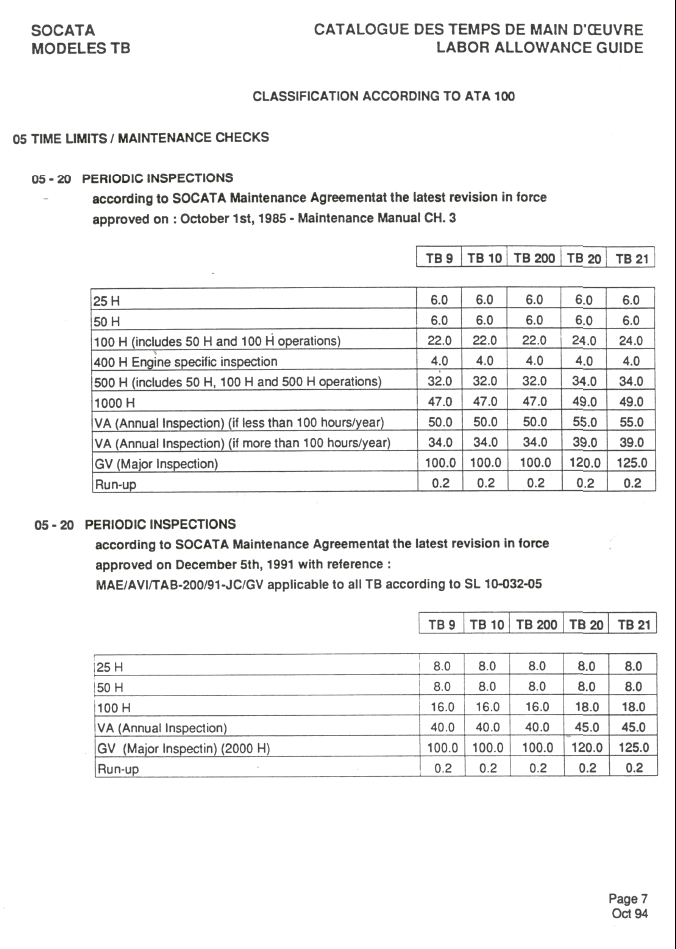
A lot of maintenance shops complain that the Socata maintenance schedule is very long, and this is true. Under G-reg, this issue can be side-stepped by either not doing the work and ticking the boxes or (legally) by doing what CAA LAMS (light aircraft maintenance schedule) says. This will be changing under EASA in 2009 though nobody knows quite how; some believe that EASA will simply mandate the manufacturer's maintenance schedule. Of course nothing will prevent somebody just ticking the boxes and still doing only half the job... Under N-reg, you can do something similar (legally) by working under FAR 43 appendix D. However, missing out stuff which really needs doing (e.g. lubrication, on which the Socata manual contains hugely detailed instructions) is eventually going to cost the owner serious money, by which time it will be years too late to lay the blame at the door of any particular maintenance firm. The Socata schedule of how many hours they think each service should take is here.
For European TB owners, there is an interesting aspect: the English language maintenance manual, chapter 5, contains an approved type-specific maintenance schedule/program which is also in use by French TB20 owners. It has been approved by the French GSAC and by EASA. This will smooth the transition to EASA Part M maintenance, compared with most U.S. made aircraft.
Socata have a vastly smoother customer service organisation in the USA (undoubtedly due to the large TBM sales out there) than in Europe and this accounts for the often noticed discrepancy in customer satisfaction between American and European pilots. There isn't much one can do about that - the culture is different and American consumers would never accept a lot of stuff which one can get away with in Europe. And the typical TBM owner has the financial resources to TERMINATE a dealer who upsets him.
TB20GT - Known Issues
The KFC225 autopilot with its defective servos (which only approx-2001 and later TB GTs came with) has no realistic solution. One can buy a set of spare servos at c. $2000 each (3 of them; overhauled price by mail order from the USA) and bank on replacing one on average say every 2 years. Suprisingly, there is no recommended periodic service on the servos (e.g. motor brushes); you are supposed to fly the plane until it fails, although obviously nothing stops you doing a precautionary servo change every (say) 2 years. For a reasonably current pilot, an autopilot failure is not a big issue unless one is doing long trips, and unfortunately nearly all my failures (about 10-15 to date, 2011) were on such long trips. As a drastic measure and one which offers no guarantee of fixing the problem, one could replace the entire KFC225 system with an STEC autopilot but all feedback suggests that the KFC225 has a much better performance than the STEC and since the STEC is far from 100% reliable this could be a hugely expensive step sideways. The KFC225 servos are very easy to replace, in minutes, due to a clever design of the mounts which enables the servo to be swapped safely without disturbing the control cables. On the STEC system, servo replacement disturbs the control cables which is dumb since servo motor brushes will eventually wear out as surely as death and taxes. The above link to the servo issues contains a discovery that the most drastic servo failures (where the circuitry burns out, rendering the whole servo BER - beyond economic repair) are caused by radio frequency interference (powerful radar signals, probably) from the ground. Future autopilot options might include the Avidyne DFC90 which conveniently uses STEC servos but my enquiries (2011-2014) with Avidyne suggest that the chances of getting it STCd for aircraft beyond their initial market which is the original Avidyne (pre-G1000) Cirrus models and especially the TB range are virtually nonexistent.
The Shadin fuel totaliser with its incorrectly located transducer (not all TB GTs have this factory fitted) can be sorted out by implementing the Shadin U.S. STC but while the job is trivial it is legally straightforward only on an N-reg where a 337 is filed with the Shadin STC as Approved Data. On an EASA-reg it would be a Major Mod. There may well be a precedent approval floating somewhere around the EU from pre-EASA days; I do not believe that none of the many European registered owners of planes with the defective installation have done nothing about it. I did some searching but did not find any Euro-reg US-STC-based installations (that anybody was willing to own up to) which suprised me. However, the simplicity of the fix is such that it would be easy to do it "unofficially". I believe the TB21 does not have this problem due to differences in the fuel system.
All TB20s made from approximately 1997 (pre-2000 it was the non-GT model) up to the end of production sometime in 2002/2003 are affected by the Lycoming SB569A crankshaft life termination of 21 Feb 2009, which is now an AD and is thus mandatory. The FAA and EASA have written the AD as a 12-year life limit from date of service but some others (e.g. the Turkish CAA) have taken SB569A literally and grounded the engines on 21 Feb 2009. This job costs around £10k to do but the downtime can be huge if poorly managed; I sent the engine to a highly reputable specialist engine shop in the USA (details) and due to various factors including shipping delays it took 4 months. Because, when an engine is opened up, any defects discovered must be rectified before the engine can be returned to service, the bill could rise substantially. Therefore, lack of SB569A compliance can be expected to knock perhaps £15k from the value of the aircraft. However, this should also be seen by a prospective buyer as a great opportunity to get the engine looked at properly.
Some TB20/TB21 aircraft were built sometime during 2000-2003 using engines that were stored (crated) for too long and were internally corroded, resulting in users discovering severe damage (barrel scoring) in later years. The damage would have been discovered much earlier if everybody was doing oil analysis but few owners do. For example, my engine was shipped by Lycoming on 24/2/2001 and didn't get installed by Socata until 8/1/2002. The first run was 7/2/2002 - nearly a year later, which is "not quite" long enough to render the engine legally unairworthy but is very careless. These dates are verified - from Lycoming and from the original French factory logbooks. Despite very regular use, the engine was found to contain widespread (but not deep) cylinder corrosion when opened up for SB569A in 2008. A borescope inspection and preferably a cylinder removal (to inspect the camshaft) is thus highly recommended on any TB2xGT purchase, unless the engine has been recently opened (or it about to be) by a trustworthy firm for e.g. the SB569A crankshaft swap and found to be OK.
The 3-blade Hartzell prop works very well but due to poor static balancing from Hartzell appears to cause excessive vibration in most installations, and dynamic propeller balancing is required. At Socata USA, and in the French factory, they do this while airborne (which is the best way because the vibration changes somewhat with the blade pitch) but very few UK outfits will do this, partly because they are afraid of the legalities and partly because it needs the accelerometer to be mounted underneath the cowling, where there isn't much room. It also takes extra work to run the wires through existing holes in the firewall, etc. I found one firm which did it for a friend of mine but they denied ever having done it. It's well worth doing even if done on the ground - I used Worldwide Aviation at Bournemouth but don't know if they still do it. The TB20 is perhaps not the smoothest aircraft flying - the rubber mounted instrument panels always move about a little, which is normal - but with a well built engine and a dynamically balanced prop can be very good; more details here.
Other small issues are:
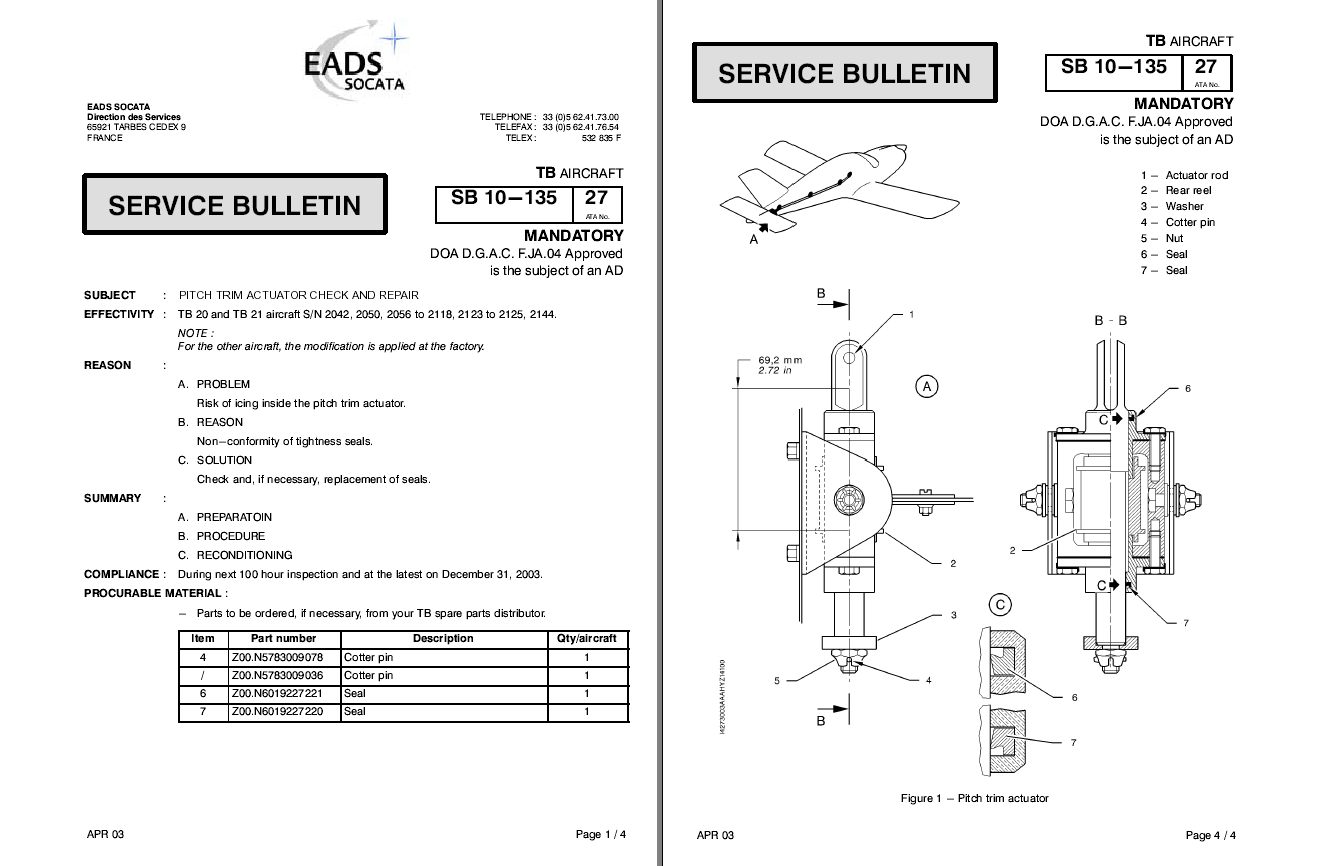
The electronic oil pressure indicator is affected by the aircraft's VHF transmission on certain frequencies; this is easily fixed with a cheap ferrite DB25 filter fitted in the back of the centre instrument cluster. The oil pressure transducer (in the same system) is not very reliable and suffers from moisture ingress via a tiny vent hole; Socata issued an SB (SB10-129) but this is ineffective because they didn't know about the vent hole. One can install a backup oil pressure gauge and while this is simple under N-reg it is probably a Major Mod under EASA.
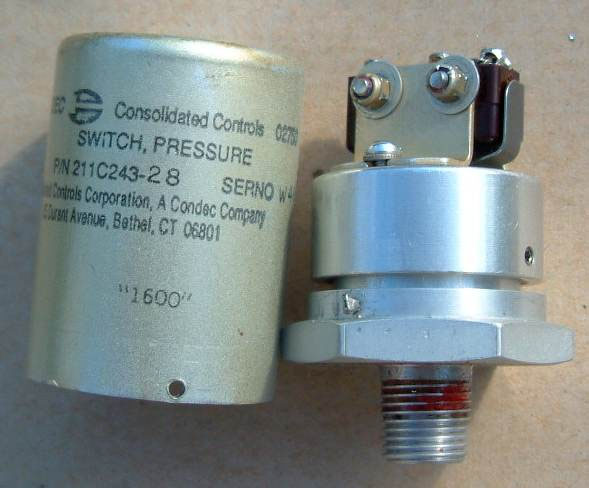
The TB20/21 retractable gear system is simple and is on the whole very reliable. The one really expensive gotcha can be the gear pump; this has gone through different models for different serial number ranges - see a note further below on overhaul options. A rather more common point of failure has been a hydraulic pressure switch which stops the pump running when the gear has been fully retracted, and which lets it run (very briefly) again to restore system pressure when the pressure had dropped a little during flight. This switch appears to have been assembled in a defective manner, and its factory-adjustable setpoint (set to 1600psi on the GT) comes loose and shifts downwards with the result that the gear does not fully retract. It is made by an obscure and uncommunicative branch of Eaton (formerly Consolidated Controls) who are aware of the issue and they have modified the design c. 2008, but every TB made will still have the old switch. From Socata, the switch is extremely expensive - around $1000. There are many similar switches on the market so an alternative would not be hard to find; this one is virtually identical. If the switch fails, you have to fly with the gear down, which is safe but drops the speed by 15-20kt.
The TB20/21 has a "ground power relay" which disconnects the battery when external power is connected. This relay has a normally-open contact and a normally-closed contact. The N/C contact happens to carry the full starter motor current. The relay specified by Socata is far too small for the job, and the situation is worse still if a higher-performance starter motor (e.g. Skytec) is installed. The result is that the N/C contact welds together, preventing the use of the external power connector. This is highly random but can be expected to happen perhaps every few hundred engine starts. I would expect it to be highly dependent on how long one runs the starter for; cold starts are normally instant but hot starts can take 2-4 seconds of cranking and longer with the original slow starter. There is no solution to this other than a modification, with a bigger relay. More details here. Most pilots will never discover this - until they need ground power and then they will find the ground power connector doesn't do anything...
Pre-GT TBs: To ease certification issues, Socata designated the GT version "Modification 151" and kept most of the Flight Manual unchanged from its original 1988 version, but in reality there was a large number of changes. I have never found a comprehensive list. They range from the visually obvious ones like the composite roof which gives an increased headroom, to the smallest details. From contacts with pre-GT owners it appears that Socata fixed a large number of persistent small reliability issues; for example the landing gear relays were replaced with much more robust versions. The landing gear pump can be overhauled which saves a huge expense... However, the pre-GT TB20 was already a very good and relatively trouble-free aircraft.
Spar corrosion: this is a very expensive problem which has affected a number of wings in mostly pre-GT aircraft. The corrosion is inter-granular and can run deep into the metal. According to engineering people close to Socata, the worst affected aircraft are from the mid-1980s, but there are known cases from the mid-1990s and later. Mid-1980s TB10s in particular seem to have been affected in large numbers, which concentrates the issue among specimens on the market because TB10 sales were low after the 1980s. Socata addresses these cases with a per-case customised modification package which costs around €4000 to €10,000 for the drawings alone. The cause of the corrosion has never been officially admitted but is believed to be due to defective heat treatment and/or incorrect grade of aluminium used during that era.
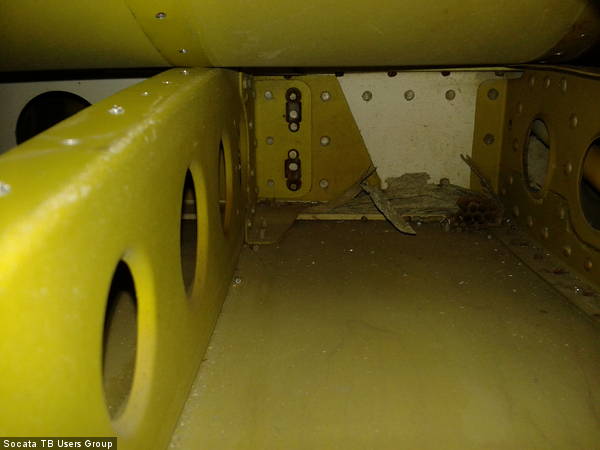
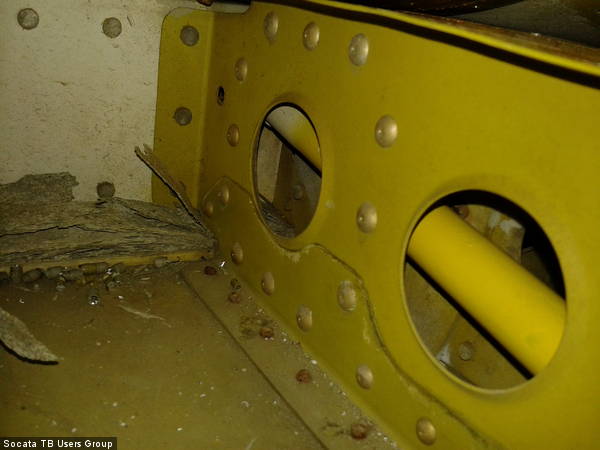
There have also been cases of extremely severe horizontal stabiliser spar corrosion. These photos 1 2 show a 1980s TB9 whose stabiliser was almost totally eaten through by massive exfoliation corrosion.Due to lack of access, it is impossible to fully inspect the two spars which is probably a breach of Part 23 certification; evidently this didn't stop somebody in the French DGAC signing off the Type Certificate in the 1970s... When those photos came to light, Socata issued an SB which requests the drilling of two holes at the bottom of the horizontal stabiliser and these enable the central portions of the two spars to be inspected, using a traditional borescope, but they don't give you access to the full length of the spars. I have a 6mm x 900mm end-viewing endoscope which can see quite a lot of the two spars through the existing holes in the central part of the stabiliser but a full inspection would need an engineering approval (DER package on an N-reg) to drill two holes in each end of the stabiliser (in the end caps / tip ribs. Such holes could also be used to spray ACF50 in there, properly. Fortunately, there is no evidence that horizontal stabiliser corrosion is a widespread issue, and it looks like the originally reported cases may have been caused by the owners tying the controls all the way back when parked, which fixes the stabiliser at an angle at which water can accumulate in the front part of it, away from drain holes. Socata's use of stainless steel rivets in aluminium does not help in this case.
Radio Static: Following an Annual during which the main horizontal stabiliser bearings were particularly well greased, I found the COM2 radio almost stopped working, due to static noise. The fix was a couple of bonding cables as shown here.
Operating Costs over 10 years
As one would expect with a new plane, almost nothing was spent on unscheduled maintenance during this period. With the exception of the KFC225 autopilot system and the infamous Lycoming crankshaft swap, the bill was probably under £2000, which is nothing short of stunning.
The direct costs are:
Fuel: 11.5 USG/hr (43.5 litres/hr) during normal economy lean-of-peak cruise;
even less during high altitude flights
Engine fund: £10/hr - this is based on sending the engine to a top-grade
specialist engine builder in the USA
50hr checks: £4/hr - based on pilot maintenance plus employing the service
of an experienced freelance engineer (it's a half day 2-person job)
Fixed costs:
Annual: £2700+VAT
Insurance: £2800+IPT (no IPT if N-reg) - this is based on a 1000hr CPL/IR,
sole pilot, no claims in past 5 years, £195k agreed hull value
Hangarage: £5000+VAT/year - this will vary widely around the UK
Propeller overhaul: £3500 overhaul after 6 years, at 700hrs (equivalent
to £5/hr)
Around the 6.5 year point, I got caught with a couple of things: The Lycoming crankshaft replacement cost a packet, and then the KI256 vacuum driven horizon (which drives the KFC225 autopilot) packed up and the cheapest option (a refurbished exchange unit from the USA) cost $3000. There is no other TB20-approved pitch/roll source for the KFC225 which is a direct replacement, but some options are for far away - see the "How to get rid of the KI256" notes near the end of this writeup. The replacement KI256 then failed 200 hours later (apparently due to a defective overhaul by Mid-Continent USA with damaged and incorrectly lubricated bearings) and while this was being overhauled again (in the UK this time; the job took many weeks because Honeywell initially sent a set of bearings which were also defective) I purchased a spare KI256 from a very reputable US company; Castleberry Instruments. So now I have a spare KI256, which is probably a very wise move. A few spare parts are a good idea anyway.
Maintenance and Operational Recommendations
This is a random list of stuff which is worth knowing about.
Who to use? On general maintenance, I would recommend any owner to be pro-active and either use a very good firm which is amenable to discussing with him exactly what is going to be done and not done, or use any firm for the Annual and then operate an active 50hr check regime under authorised pilot maintenance during which he can ensure that everything is lubricated properly.
The least-hassle way to work aircraft ownership is to assemble a bunch of people who one can trust - different people for different jobs. I use one company for the Annual, do the 50hr checks myself, use a small local avionics man for small avionics jobs, haven't done any major avionics work but would use a carefully chosen avionics firm for that, etc. The contrary view is that using one company (in aviation, you are "supposed" to use your dealer for everything) will result in a valuable long term relationship, and this works well for some owners, but this option is not available to many owners for geographical or political reasons. At the "cheap" (piston) end of aviation, few of the service companies (e.g. avionics shops) will travel to you; the normal line is a "bring us the plane and we will have a look at it" and straight away this is a few hundred £ in flying costs, plus trains, taxis, or hotels, and a load of hassle. Freelance engineers tend to travel and such contacts can thus be hugely valuable. Also, the freelance man knows where the buck stops whereas a large company can hide behind its certification and most of the time you have no idea who actually did the work.
Ultimately, you may want to give at least some work to a company at your airfield, for obvious local-political reasons.
Lubrication... The vast majority of cosmetic damage to an aircraft is done by maintenance, but the thing which will really affect how the maintenance costs rise with age is whether it has been lubricated properly. Planes in this price range (sub turboprop) rarely use ball bearings (even though sealed ones would do wonders for the entire maintenance process) on control linkages or anything else that moves. One usually ends up with plain bearings (brass/bronze bushes running against a steel component). If one of these has a grease nipple, only a moron can get it wrong because you simply pump in the grease with a grease gun until it starts to ooze out at the ends. It is those without a grease nipple (the vast majority of the smaller ones) that are the problem - these must be dismantled, avgas-washed, dried, packed with fresh grease and reassembled. If this is done correctly, the lubing should last for a year or more. However, this disassembly takes time and very few maintenance companies do it; most preferring to use a convenient aerosol spray which is aimed at the ends of the bearing, and with some luck some of it seeps inside the bearing where is will happily co-exist with all the grit and metal particles which have accumulated there over the years. The bearing surface may be formed with a replaceable insert but there is rarely an approved procedure for replacing just the insert so the whole part has to be replaced and £1000 for a little aluminium part is not unusual. The results of not doing this lubing correctly range from control stiffness to having to spend a lot of money on expensive airframe parts. Or a gear-up landing (typical cost £30,000) caused by a failure of the hydraulic pump coupled with a lack of lubrication which prevented the emergency gear release working. I have had e.g. elevator trim linkage bushes totally trashed after 8 years of these practices; they continue partly because the maintenance manuals are at best vague on how it should be done, and partly because of another widespread practice: tick all the boxes but do only some of the work. Also, most of their clients are operating very old planes which are expensive to maintain anyway so the replacement cost of the occassional seized-up component goes un-noticed.
From users' reports it also appears that the rudder is likely to be missed off because one needs a ladder to reach the upper bearing, and a complete removal (not necessary for proper lubrication) of the rudder takes 2 people about 2 hours. There is a widely-circulated photo of a TB20 rudder which fell right off because the bearing had not seen any grease in around 20 years and eventually wore right through. However, to be fair, it's pretty obvious these pilot(s) never did any preflight checks on the back of that aircraft, or possibly anywhere else... The elevator is similar - a 3-man job although again one can lube the two bolts and their bearings without detaching the rudder.
The Socata owners group (mentioned elsewhere in this article) has a useful lubrication guide which for some childish reason has been produced as a Flash movie, in an attempt to stop it being downloaded and distributed outside the group. Of course PDF copies were instantly made by various means but I can't post one here because the site owner has claimed copyright on it.
Elevator Trim Mechanism. The elevator trim comprises of a screw mechanism, a linkage comprising of four bushes, and the trim tab with four hinges. The hinges last very roughly 1000 hours, and the whole kit of four, including the hinge pins, costs $ 4 digits. Per hour, it is not a huge cost, but the strikingly stupid aspect is that this could have been improved with a bit of thinking. With any hinge (look at your nearest door), half will never wear because it has no relative movement between it and the pin. The only parts which wear are the other half, and the pin itself. On the TB, Socata attach half of the hinges with easily removable screws, and attach the other half using two rows of pop rivets. Guess which of these hinges are the ones that wear? Yes - the riveted ones!! And to make it doubly stupid, half of the pop rivets are not accessible from the other side so when they are drilled out, the wasted ends fall into the elevator and rattle around, until several hours are spent removing the elevator (a 3-man job) and shaking the ends out through a little orifice near the front of the elevator. The GT series trim tab uses four PTFE coated hinge pins which sell for around £100 each.
I have established several things:
A lot of the play in the trim tab comes from the linkage (020/030 and 100/110 in the aforementioned PDF) which comprises of four bushes which are easy and cheap to replace. Any play in these parts gets greatly amplified at the back end of the elevator trim tab. The front three bushes rarely get lubricated. Replacing the lot costs only about 100 euros, and takes about 2 hours. This linkage should be completely dismantled and lubed, and any worn bushes replaced, before spending any time or money on the hinges.
At this point, check there isn't excessive play in the trim screw / cable spool mechanism. This is unlikely unless the aircraft is old and been poorly maintained, but if this is worn out it will be expensive to fix... but again there is no point in doing the hinges until it is done.
Next, there is no point in replacing the complete set of hinges and pins unless they are really all knackered. Replacing just the two outermost pins takes under an hour and improves matters well enough to last years longer. This involves undoing the bolts on all four hinges; this opportunity should be used to clean the whole lot out of any dirt and old lubricant. I did this (plus the linkage bushes) at 1000 hours and the play at the trailing edge reduced from 4mm to 2mm, and it was an easy job costing about £300 in parts (c. 2013). The parts in question are shown here and the pins needed (3/2013) are
2 x TB20 0903210100 (drawing ref 040+100)
2 x TB20 0903210000 (drawing ref 050+090)
Next is the discovery of many TB owners that fitting all brand new hinges and pins doesn't actually make a lot of difference!! This is due to excessive tolerances on the components. The outside diameter of the PTFE-sleeved hinge pin is 3.2mm and the hinge hole is about 3.4mm (and is inaccurate anyway due to the extrusion process) so there is a lot of play to start with, so even with brand new parts throughout there will still be about 2mm of play at the trim tab trailing edge. Matters are not helped by the hinges having filled with paint during Socata's spraying all over the assembled elevator; big chunks of this paint come out over time and the uneven nature of it will have damaged the PTFE coating.
The metal rod in hinge pins does not wear because it is shielded by the PTFE sleeve, and could in theory be recovered by re-sleeving it with PTFE heatshrink of an appropriate size chosen to achieve the correct final diameter. Unfortunately, no commercially available PTFE heatshrink sleeving is thick enough to produce the required OD of about 3.3 to 3.4mm. One way is to find two sleeves which when combined will yield the right diameter. Another is to find a source of some PTFE tubing and push this onto the pin, but any gap there will cause unwanted play. The bare pin diameter is 2.25mm; it has a weak magnetic response and is probably made of stainless steel. The whole system would work a lot better if the pin OD (sleeved diameter) was increased from the present 3.05mm to 3.45mm, and the inside hole of the hinge was cleaned up with a long 3.5mm reamer. The usual reason for generous control surface clearances (icing) would not apply here due to the slippery PTFE and the relatively massive leverage from the trim tab mechanism. More information from a 2025 investigation is here.
The PTFE-coated hinge pins are not supposed to be lubricated; one wonders why. Any lubricant used would have to work over the full aircraft temperature range and be PTFE compatible, of course. The most plausible reason for non-lubrication is that some lubricants could make the PTFE swell up; that makes more sense than the standard explanation is that a lubricant would attract dust.
Input from an expert in aircraft aerodynamic stability is that these hinges are wearing around 10x to 100x more quickly than apparently identical aviation-grade hinges elsewhere and this suggests that the elevator trim tab may be suffering from in-flight vibration (not quite "flutter" which would be dangerous). This would result in this kind of rapid wear. The trim tab has no counterweights and its avoidance of vibration and flutter relies on an accurately assembled low-backlash operating linkage. The condition of the linkage is therefore likely to be vital in prolonging the hinge life.
I also suspect that when the hinges are completely changed, they often end up out of alignment. It is damn hard to line up four wooden door hinges... On the TB, most fitters use the old hinges as a template to drill the holes in the new ones (which come undrilled) and this is fine but I think one should also insert a length of accurately fitting and very straight (approx 3.4mm diameter) steel rod through all of them, to make sure they are all on one axis, rivet down the elevator-side ones, then remove the wire (by gradually snipping pieces of it out between the hinges and sliding it out), and then the other hinges (on the trim tab; held by bolts) should line up OK.
All the hinge parts are made by what is now called GKN Stellex in the USA and appear to be off the shelf items; a standard extruded hinge section widely used in aviation costs of the order of $100/metre. Like most Socata suppliers, Stellex do not reply to communications so some effort would be needed to make progress.
A different issue with the trim tab system is that if someone puts the wrong lubricant into the cable spool assembly, it will freeze up at high altitudes. I have had this happen on an IFR flight at -15C, probably as a result of some liquid or incorrect lubricant ingress. The autopilot then fails in pitch trim. The failure is initially evident via the "trim in motion" message. Once this happens, the only way is to remove, dismantle and clean out the whole screw assembly, and re-pack with Shell #7 grease. The following pic shows the main parts, just before re-assembly is completed. It's about a day's work, and there is some "technique" involved to avoid losing the front part of the trim cable into the cockpit part of the aircraft...
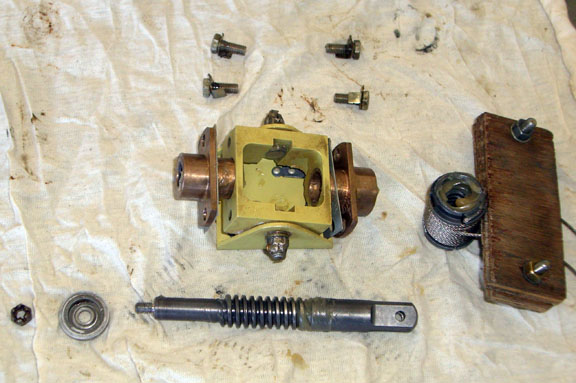
The parts shown in the above pic apply to the TB GT but only after a certain serial number. In the above (later) mechanism, there are two PTFE seals (not visible above; they are inside the two brass items) which cost about 80 euros each and these should be replaced if the mechanism is opened up. The old ones cannot be removed without damage. There is an AD on the seals, based on SB10-135 (part shown here) which is applicable to some TB GT serial numbers. I am not convinced this is a real issue; the seals don't seem to do anything since there is no obvious way for water to reach the screw assembly and if it did it should exit via the open side of the "box" shown above.
Like most of the TB20 it is a well engineered system but if you don't look after it and it wears out or corrodes, it will cost thousands... But that applies to any aircraft. This job is an excellent opportunity to dismantle the trim tab linkage and sort out the four bushes...
Landing Gear Pump. See here
Emergency Gear Release Valve. This is a very simple manually operated and virtually failsafe device which releases the hydraulic pressure back into the system and allows the gear to fall under its own weight (the nosewheel has two gas struts to help it come down against the airflow). Under EASA rules this valve needs to be overhauled every 3 years and this causes much more trouble than it's worth. Under FAA rules it sensibly only needs to be done on-condition. The valve contains three seals and the job cannot be done by just any old monkey. The TB20 IPC contains incorrent information on the seal part numbers; the valve type (ref 010) has been changed but the IPC still quotes the seal numbers for the old one. The wrong seals have often been installed resulting in a very short seal life (sometimes, like in my case, hours). The error is repeated elsewhere in the IPC (05-10-00) where more meaningless part numbers are quoted. The correct part numbers for the TB20GT are ZOO.N7423520810 (o-ring in the top of the valve - not referenced in the above valve diagram); ZOO.N7423529179 (shaft seal; 2-off). As of Feb 2006, these numbers have still not been corrected in the IPC. The seals are made by Trelleborg and others but these firms do not reply to communications regarding part numbers they recognise as going to Socata; anyway the cost from Socata is not significant.
Door Gas Struts. See here
Main Landing Gear Gas Struts. See here. To make these last, keep the chrome rods super clean! Clean them before every flight.
User Group. The Socata user group can be a useful resource for TB owners who do not completely rely on their dealer. The mostly American site is owned and tightly controlled by a one-time Socata employee and TB owner who lives in the USA. It is not an official Socata factory support site although it does seem to operate with their tacit approval. In the discussion forum, do stick to purely technical Q&A topics and avoid expressing opinions that might have alternative interpretations in different cultures - preferably avoid expressing any opinions whatsoever - otherwise you risk getting jumped on! A "moderation" function added in 2008 enables the blocking of postings from specific people (who like me have upset the site owner, or one of the regulars), until the site owner has approved the posting. In early 2009 the censorship was expanded to prevent "moderated members" contacting other members; this didn't matter much to me as by then I had been in contact with many by email. All forums have a tendency to become rather negative but in this case there are many owners whose planes are on the market and they get upset by criticism of the type, because many prospective buyers read the forum. Definitely avoid expressing opinions on how much a particular plane might sell for. I discovered that all postings apparently become the site owner's property - another reason to be very careful what one writes there. The forum has an "Owners only" section to which you get access if you submit evidence of TB ownership, and negative comment on the aircraft or contentious issues get moved into that section. Despite the childish politics, a steady decline in technical content over the years, and a gradual disappearance of European pilots, the site is well worth reading periodically. A new European GA forum was started in 2012 and all TB owners (worldwide) are welcome there. It reached over 70,000 posts by 2015 (350,000 in 2023) and is a goldmine of information.
The user group site also carries an official copy of the TB maintenance manual which is very rare for any aircraft. Possession of up to date data is in theory a legal requirement for any maintenance whether done by a firm or by the owner. Most manufacturers, Socata included, license this information to a firm called ATP who resell it as an extremely expensive CD which can fortunately be picked up on Ebay from time to time. As TB production stopped years ago, the 2006 CD which is widely floating around is perfectly good enough and I highly recommend it. However, the online manual does not include the latest wiring diagrams, and the ATP CD is quicker to browse despite not being text-searchable. It's worth noting that the GT wiring diagrams (year 2000+) were never included on the ATP CD but fortunately they are "floating around" and are essential for avionics upgrades like this.
I have not seen any changes in the MM (maintenance manual) or IPC (illustrated parts catalogue) after about 2003, which was the final year in which any TB aircraft left the factory. The latest pages in the MM/IPC seem to be 2005. However, part numbers do change periodically as Socata change their suppliers, and this gets picked up when you try to order a part and Socata come back with a new P/N.
Socata also provide a free factory site which carries a freely accessible list of SBs, in addition to a lot of documentation which needs to be paid for. Curiously the TB maintenance manuals are charged for, while the TBM ones are provided free of charge on the site... This site also carries an online price list; it works only for one P/N at a time, by entering the P/N into a box. This should prevent different dealers charging different prices. For Australian residents only, the site also supports direct online ordering of parts (current 3/2010).
Extended warranties: This is an option only on the avionics. For two years following the expiry of the original two year Socata warranty, I had a two year Honeywell warranty and made one claim under this whose value appeared to make the warranty worth having, but in reality this is a false impression and I believe these warranties offer poor value. Details here.
I have a large collection of avionics installation and operating manuals so if you need anything, drop me an email. These are priceless if you are using a small friendly avionics engineer to work on the aircraft. And if you have any (in PDF form) I would appreciate them because they can help out somebody else one day.
A useful site carrying suprisingly comprehensive data on TB aircraft serial and registration numbers, and where they ended up, is here (local copy).
The best single thing which can be done to make an aircraft remain in good condition (inside and outside) for a long time is hangarage. This can be very expensive and probably not worth paying for on a strict basis of rent paid versus actual aircraft resale value depreciation, and it has been hilariously observed that for the cost of most UK hangarage one can have a new paint job every 2 years, but the difference in aircraft condition after say 10 years is massive. After 7+ years, mine still looks and smells like it was brand new. There is a strong effect on avionics reliability but it has a big random component; some owners are lucky and some are not. The two biggest killers of avionics are humidity/corrosion and vibration and from what I have seen of the build quality of modern glass panel avionics I have no reason to believe they will be any better in the long term than the old "separate units" ... just a lot more expensive!
I also keep a 0.5kg bag of silica gel permanently in the aircraft, and this is changed for a fresh one whenever I fly - on average once a week. The expired bag is baked at +120C overnight to recycle it; I bought about 10 of these and bake them all together when I have a number of them to do. They came from GeeJay Chemicals and the material is self-indicating orange to green silica gel, supplied in stitched cloth bags. Rough measurements with a relative humidity meter suggest that one of these bags placed anywhere inside the cockpit reduces the RH by around 10 percentage points which represents a large decrease in the condensation potential. Each 500g bag has been found to absorb around 30g of water, which is a LOT.
Many owners get the inside voids of the aircraft sprayed with a corrosion inhibiter; the two main brands are ACF-50 and Corrosion-X. This is cheap but needs to be done every few years. I had mine done with ACF-50; a "customer-assisted" (I did the various inspection covers) job cost under £300. One needs to be careful the stuff does not get sprayed onto things like autopilot servo capstans (one must not get it into the clutch inside the capstan), brake disks/pads, etc. One also needs to be careful where the long spray nozzle gets poked as it is easy to damage something with it, especially wiring. Eventually I purchased my own ACF-50 spray kit from Aircraft Spruce; it uses a compressed air supply, or a scuba air cylinder with the scuba first-stage regulator followed by an adjustable 20-100psi regulator.
Oil analysis is something I do but many owners think it is a waste of
time, saying "are you really going to take the engine apart if you find
some metal in the oil?". Well, I would... The cost is around £10-£20
per sample (taken at each oil change) and it should give an early warning of
things not being right inside the engine. I purchased a large number of pre-paid
test kits which are sent off to Aviation Laboratories
in the USA. After the initial run-in period, I have been using Exxon Elite and
the oil analysis has shown very good results, but in 2009 I switched to the
Aeroshell 15W/50 multigrade oil in the hope that it eliminates the watery sludge
which Elite used to suffer from - mainly around the dipstick and under the rocker
covers - and sure enough it works. Currently, I am conducting an experiment
where I am alternating between Exxon and Shell multigrades and monitoring the
oil analysis to see if there is any consistent difference in engine protection.
2/2010: no significant difference has yet been found, and I have continued with
Aeroshell. Such "data" as I have found suggests that any difference
between the two is 100% marketing hype - so long as the engine is operated regularly.
Update 2015: I now use Blackstone in the USA. This follows test of the same
oil sent to Aviation Labs, Blackstone and Intertek (formerly the Ministry of
Defence) in the UK. The last two were close. More details here.
Engine Management
This is important on the larger air-cooled engines. It is however easy to follow some simple procedures; the following is TB20 only:
Climb is done simply with all three levers fully forward until top of climb. The exception here is when climbing to more than about 7000ft when a transition to a +500fpm cruise climb is better as it avoids a too-rich mixture for the altitude, and helps cooling. More clever pilots can climb using the constant-EGT method: pick any cylinder and look at the EGT shortly after takeoff, and then progressively lean so as to maintain that EGT as you climb (this also produces a near-constant CHT throughout the climb). One should avoid exceeding +400F CHT at any time (Lycoming's redline is at an eye-watering +500F); this is almost impossible to achieve if climbing at Vy, never mind Vx, so one normally trims forward to climb at about 120kt for a greater cooling airflow and that works nicely. The rate of climb is barely lower at 120kt than at 95kt and the engine is much cooler. The only reason for climbing at steeper angles is for obstacle clearance. If there is a general problem maintaining CHTs below 400F then it is likely that the baffles around the engine are knackered and are allowing air to leak past, without going through the cylinder fins; these baffles are made of a flexible fabric-like material widely used in aviation. A great article on how to comprehensively repair the baffles is here. The other potential reason for a high CHT in climb is that the fuel servo full throttle flow rate can sometimes end up being set near the low end of its allowed range; the upper limit is 24.8 GPH and it is worth having it adjusted to this figure if CHTs are a problem and the baffles are OK.
At top of climb, transition to cruise by trimming forward, waiting for the target speed to be reached and then setting the engine to the desired operating point. There is much debate on this, and the IO-540-C4D5D engine is rated at 100% power indefinitely so you could just burn along at some 160-165kt IAS... with the fuel flow rate to match (23GPH at low level). Such data as there is suggests that 60-65% is going to make the engine last much longer and a setting of 23"/2300rpm/11.2GPH (this flow rate is when leaned very slightly lean of peak; LOP) delivers about 138kt IAS. I fly at this setting all the time, except that I find the engine is smoother at 2400 than 2300 - this is most likely engine specific. The efficiency of normal petrol engines is best about 25F LOP and the curve around that point is very flat anyway, so the best-MPG point is achieved anywhere at or just past peak EGT - there is no need to get overly precise about it. It's hard to get it wrong anyway since the power (and thus speed) drops off pretty fast if you lean too far into the LOP region.. LOP is the way to operate this type of engine - it gives cool clean operation and great fuel economy.
Optimal economy cruise: Some experiments on this trip suggest that at FL100 and about 5% under MTOW one can achieve 140kt TAS (2200rpm, 9.0GPH) which gives an endurance of 9.5 hours and 1300nm zero-fuel range. FL200 was also easily reached on that flight, and the TAS up there is also 140kt (2575rpm, 100F ROP). On this trip, the range was stretched even further.
Here is some data collected on a test flight. The IAS was kept constant as this is a direct measure of thrust. The RPM was kept constant as this keeps propeller efficiency constant. The MP was varied to achieve the same IAS in all three cases.
Conditions: 5600ft, QNH=1031mb, +4C, 2400 RPM
| Line | Oper. Point | EGT (F) | MP (inches) | IAS (kt) | USG/hr |
| 1 | 75F ROP | 1440 | 22 | 140 | 12.5 |
| 2 | Peak EGT | 1515 | 23 | 140 | 11.7 |
| 3 | 25F LOP | 1490 | 24 | 140 | 11.7 |
The above shows that 25F LOP does not yield additional efficiency over Peak EGT. However, LOP operation is cooler than Peak EGT.
Thermal management (shock cooling avoidance) is done easily enough by always (unless safety issues override) reducing the MP gradually, 1" at a time. John Deakin on Avweb has written a lot on engine management and this is worth reading but the reality is considerably simpler. The best evidence for/against shock cooling is here and this suggests that the danger exists only above a certain - fairly high - CHT; logical since aluminium weakens substantially above the 350-400F area. If a rapid power reduction is unavoidable (e.g. a glide approach during a checkride) this should be fine provided the engine is cooled well beforehand. Engine management issues tend to imply that one should avoid flying circuits with a TB20 and I would agree with that. If your instructor insists you go and bang around a load of circuits, try to do it in somebody else's plane! That's what most people do.
High altitude cruise, e.g. FL150-200, is different because there is not enough air out there to deliver even 60% power, so despite being at wide open throttle (WOT) one is grateful for anything one can get. A higher RPM of course sucks more air into the engine, so 2500 or even 2575 (the maximum) is used. At the highest altitudes, or when you simply want all the power you can get to get somewhere and aren't worried about the fuel flow, 100F rich of peak (ROP) gives the best power - this is easy to set by leaning any one cylinder to peak EGT, noting the EGT, and then enriching by 100F. Although obviously conditions vary according to temperature and loading, I find that the most economical cruise setting (2200rpm, LOP) cannot be achieved above about FL150; at FL160 one needs to go to 2400rpm (still LOP) and at/above FL180 it is necessary to go to 2575rpm and 100F ROP. While the MPG tends to be relatively constant over the FL100-FL170 range (WOT, LOP), FL180 and above is less economical, with the penalty reaching 10%.
During descent, there is very little to do. If you were at peak EGT or LOP during cruise, the mixture does not need touching during the descent. The engine will end up being leaner and leaner as you go down, but this doesn't matter as one doesn't need the power anyway. Just remember to reset the mixture for the proper low level cruise setting (say ~ 11GPH for ~ 140kt) when levelling off. Technically, one should enrich the mixture during the descent to maintain the engine operating point but why bother unless the power is actually needed? The engine isn't going to stop. However, if descending from a high altitude, say 18,000ft, some enrichment (for extra power, or to eliminate rough running) will eventually be needed if the rate of descent is shallow.
Some general notes on normally aspirated engine management are here.
The normal way to fly the circuit to land is to set it up for downwind nicely trimmed for 90kt (which happens at about 16-18" MP, in level flight), drop the gear and 1st stage of flap and increase the MP by 2" to compensate for the extra drag, turn base at 90kt, turn final at 90kt, and select the landing flap somewhere during final which all by itself reduces the speed to 80kt - exactly as required. Significant forward yoke movement is required when the landing flap is selected to prevent "balooning" and to maintain the "glideslope". On very short final, reduce power for about 70kt, gradually reducing it further as required at touch-down.
Instrument approaches terminating with a circle to land need to be flown carefully if there is terrain nearby, and in such cases one may well need to be configured fully for landing (gear down and landing flap) early on, so as to fly the tight base turn at the lowest possible speed of not much over 80kt.
Unleaded Fuel?
Avgas 100LL is causing a lot of concern to a lot of people. In the USA, with its huge piston GA community, it is extremely unlikely to disappear before an equivalent "100 octane" fuel is available. However, Europe is a different matter and GA is more vulnerable. In a highly welcome development, Lycoming have recently issued a service letter (local copy) which (see page 3, halfway down) lists the IO540C4 engine as OK for 91/96UL fuel. Currently, however (4/2012) this fuel is available only in Sweden.
Lycoming have informally stated that they have been unable to make any of their engines detonate on 91UL unless several things happened concurrently: (a) CHT exceedingly high (~550F); (b) ignition timing wrong; (c) leaning above 75% power (which itself is likely to result in (a) if prolonged).
6/2013: The 91UL fuel which is currently being pushed by TOTAL is now approved for the IO540-C4. However, in the UK at least, this is an empty achievement because TOTAL have increased the price to a level very close to 100LL so almost no airfield bothers to carry it.
Desirable Upgrades?
This concerns mostly avionics. A note on installing a second alternator is at the bottom of this section and that might be regarded as the most desirable upgrade of them all.
Pilots who walk around airshows looking for somewhere to spend the £30k which is burning a hole in their pocket would be frustrated with the TB20GT because more or less everything is already there, and any avionics upgrade that actually does something useful would cost a fortune; well into 5 digits. Avionics shops (who ritually hate doing quotes anyway) will be equally frustrated with such an owner... However, here are some "retail therapy" suggestions...
To some degree it depends on one's view of the future regulatory climate.
In the USA, a 2002 TB20GT should be safe equipment-wise for many years; a 406MHz ELT may have to be fitted in 2009.
In Europe, regardless of the aircraft registration, it could be very different. Currently a Mode S transponder is virtually mandatory for any serious touring but is easy to fit. 406MHz ELT requirements are being defined now. ADS-B may come many years later. GPS approaches are another thing - if you always fly to airports with ILS then GPS approaches are irrelevant. Conventional GPS approaches are no problem but if the "vertical guidance" GPS approaches ever come along then a significant avionics upgrade will be needed.
PRNAV (Eurocontrol site) is the biggest dark object on the horizon which could cost dearly in terms of pointless equipment upgrades; JAA TGL10 local copy is one reference (5MB PPT presentation) but is sufficiently ambiguous to have been debated interminably. One explanatory note on PRNAV is here. Another is here (local copy). The weird thing is that, for flight in Europe, not only the individual aircraft needs to be certified but also the pilot needs to be personally qualified; and presently (12/2013) very few GA aircraft owners have achieved this. The big U.S. GA training material publisher King runs a PRNAV crew course here. One individual used to run a 1-day course and issued a certificate at the end of it but it now appears these are not valid anymore. The training needs to be done by an FTO/ATO.
One interpretation of TGL10 was that an auto-slewing HSI (an EHSI) is required but this concern proved to be false provided a moving-map GPS is installed; see notes on EHSI below. A Cessna 150 with a GNS430 and no autopilot can get PRNAV approval!
Due to the vast majority of aircraft currently flying, including most non-European airlines, being non-PRNAV compliant, support for non-PRNAV traffic must continue at some level not least because State aircraft will be exempted from it. Currently there is no PRNAV-mandatory enroute airspace, and every PRNAV SID/STAR I have seen (there are now many airports whose SIDs/STARs are all PRNAV) has an "advise ATC if not PRNAV capable" option which is usually worded to enable everybody to wash their hands of the whole thing.
The UK is introducing PRNAV in the London TMA at some stage over the next few years. 12/2013: the London TMA is PRNAV but only for aircraft operating from the major airports (Heathrow, Gatwick, etc) and maybe this is the trend we can expect, which won't affect light GA.
PRNAV was conceived about 15 years ago, in pre-GPS days when navigation accuracy was an issue. Back then, various standards like RNP5 (5nm accuracy) existed. PRNAV is equivalent to RNP1 (1nm accuracy). Today, anything modern uses RNAV with DME/DME or more likely GPS as the primary position sensor and RNP1 is trivial to achieve. GPS approaches require RNP0.3 (0.3nm accuracy) and have de facto made PRNAV an irrelevant specification, not least because one can get GPS approach approval with much less paperwork and no formal crew training. There were indications that the whole issue of PRNAV may in the end lead nowhere but this hope now seems false.
There is also a proposal (12/2013) for mandatory ground (theory) training of all pilots flying any GPS procedure - even the GPS approaches which they have been flying for years. However it is believed this will be a few hours at most. The proposal also includes mandatory GPS flight training; it is believed that flying a GPS approach on the annual JAA/EASA IR revalidation flight will take care of that. This implies that the FAA 6/6 IR rolling currency will cease to be valid in Europe, but EASA FCL is forcing pilots of EU based operators to obtain EASA pilot papers anyway, by April 2015, so this is moot since anybody affected by this training requirement will be doing a 12-monthly IR checkride anyway.
The FAA version of TGL10, applicable to US registered aircraft operating outside
US airspace, is AC90-96A
local copy. On page 14 this details the requirement
for an LoA (letter of authorisation) which needs to be obtained from an FAA
FSDO. US pilots are not concerned by any of this because it doesn't apply to
US airspace
Honeywell have dropped all development on the KLN94 and while this supports most IFR procedures, and is a super simple unit which does everything needed in practical IFR flying, it does not come with a LoA (letter of authorisation) for PRNAV. This came from Honeywell USA on 9th July 2008: The KLN 94 is not going to be upgraded for PRNAV or AC 90-100A. It is non-compliant for RNAV Type SID/STAR's. The general explanatory letter from Honeywell is here. The importance of this depends on whether any European country makes PRNAV absolutely mandatory for significant chunks of airspace. There is no problem flying PRNAV procedures with the KLN94 but without the aircraft and crew being PRNAV certified it cannot be done legally. According to Honeywell (3/2011), production of the KLN94 ceased in January 2011 and confirmed there are no planned upgrades.
The main reason for the lack of PRNAV approval (known as RNAV 1.0 in the USA) for the KLN and most of the older TSO C129A GPS units is that the CF (Course to a Fix) leg terminator is not supported by these units. It is required for RNAV 1.0 and RNP 1.0 and can be used as a part of the RNAV SID. Why Honeywell did this stupid omission on an otherwise "fully IFR capable" GPS is anybody's guess. Although an equivalent effect can be achieved using the OBS mode, this violates the principle that the entire procedure must be loaded from the database and is not subject to change by the pilot.
Update 2/2019: There is no longer any need for an operational approval for PRNAV (now called RNAV1) in Europe. This eliminated the need for the FAA LoA.
A more practical issue with the KLN94 is that its database does not contain most RNAV SIDs and STARs. Another issue with the KLN94 is a total lack of support for RNAV Transitions (see the LOWW example). These things are not an operational issue at present because the all-PRNAV airports all seem to offer dispensations to non-PRNAV aircraft. My experience at airports where no non-PRNAV alternatives are available (SIDs at Zurich are one case I recall) is that when you tell ATC you are not PRNAV compliant, they could not care less and just tell you to fly the "overlay" using whatever means you have.
It is possible to replace the TB20 Honeywell centre avionics stack (two KX radios, KLN94, KMD550) with two GNS530 sized units and there would be a bit of room to spare. I think that if PRNAV becomes mandatory in any sense significant to IFR GA, everybody will basically have to rip out their avionics and install Garmin stuff, but see notes further below...
The GNS430 is slightly easier than the 530 in paperwork terms. The GNS430 was certified for all TBs and all TB serial numbers under the TC by Socata, under their Option 23003A.
Eurocontrol just love to play with new ways to control the world and there seems to be a widening gulf between what navigation capability is mandated and what is actually required for IFR flight. You might need PRNAV, RNAV SID/STAR capability, GPSS, it would be "sexy" to have a GPS/autopilot system which can automatically enter and fly a holding pattern, but the reality is that ATC just give you "own nav to", "direct to", "turn left/right heading XXX", "report localiser established", "contact tower" kind of stuff and that is more or less it. Privately, senior IFR ATCOs tend to be highly sceptical about the new stuff because the "real world of IFR" runs on radar, the ATCO is paid to maintain separation and gets into big trouble if he fails, and they cannot see this ever changing. I think they may be right - at least for many years. In 2013 Eurocontrol finally managed to make 8.33 channel spacing mandatory for IFR which in class A/B/C/D will require 8.33 radios from 1 Jan 2014 below FL195, and a TB21 requires 8.33 from 2008. Even VFR aircraft must have 8.33 on any new radio installation, or on any replacement of a radio unless of the same model of radio - reference.
When considering avionics upgrades to a GT, look at the TB20GT Type Certificate. This is both FAA and DGAC (and thus EASA) approved and anything on it can be installed straight in, with no certification required. For example, the Garmin 430/530 are on the TB20/21GT TC and I believe there are processes available to install the W versions. On the other hand, a pre-GT TB predates this TC and EASA registered owners have had some fun installing the Garmin units where they wanted two of them. I know of one case where EASA required a Major Mod approval for a dual-530 installation, on the silly grounds that a failure of one of them could affect the other one, via the data crossfill interconnection. The fact that a dual-530 installation was on the Socata Type Certificate for a later TB serial number range did not cut any ice with the anally retentive EASA officials.
There is a point of view that Garmin will gradually take over the whole world, either by pushing everybody out of the piston market or by taking them over and then closing down competing product lines. This may be an excessively gloomy scenario but inter-avionics compatibility is an increasing issue; for example the attractive Aspen EFD-1000 took years to get certified to replace the KI256 vacuum AI and thus act as a primary AI for the applicable autopilots. Also, if Aspen (currently owned by a venture capital firm) become really successful they will become a prime takeover target for Garmin who will kill off any superfluous parts of the product range.
The most direct PRNAV compliance route would be a replacement of the KLN94 and one of the two radios with a GNS430W or GTN650, but this creates an issue with the KMD550, in OBS mode. I therefore expect most users to install a GTN750 in place of the KLN94 and the KMD550. The GTN750 can be used as a quasi MFD, although it still doesn't provide the nice functional separation of a KLN94+KMD550. Future alternatives, currently (12/2013) vapourware, are the Avidyne IFD540 and the Honeywell KSN770 which are both aimed at the GTN750 market.
GPS Approach Approval: The standard Socata GPS Supplement (DGAC and FAA approved) authorises IFR (BRNAV) enroute only. This is scandalous on a $350k IFR aircraft and since American customers would have never accepted it, American dealers routinely produced a custom FAA approved flight manual supplement which authorised all IFR operations. The procedure involves extracting a near-ready supplement template from the back of the KLN94 Installation Manual, and sending it to an FAA FSDO off with an FAA Form 337. This is straightforward in the USA (unless you get a really anally retarded FSDO, which is very possible) but European based owners of US registered aircraft are forced to go through the New York International Field Office which is no longer co-operating on GA GPS approvals. EASA registered aircraft follow a different procedure. Currently (6/2012) GPS approaches are only just becoming operationally relevant in Europe; most of them are at locations served by conventional approaches, and since no laws prescribe what equipment is to be used at any phase of flight, it is fine to fly e.g. an NDB approach using a GPS (using either an overlay representation if one is in the database, or with the GPS's OBS mode). But this is something which any European owner ought to sort out. I did mine in 2012 and have some notes on it here. The KLN94, driving an autopilot via an HSI or an auto-slewing EHSI, flies the standard T-shaped GPS/RNAV approaches beautifully.
Mode S: I installed this in 2005; the Garmin GTX330 costs around £2500 plus VAT. It cannot go in the same location as the old KT76C because it is longer; it goes where the KR87 ADF was and the ADF is moved down to the previous transponder location. One could go for the Honeywell KT73 instead of the GTX330, which is a plug-in swap for the KT76C. KT73 owners report that its display is much more sunlight readable than the GTX330's LCD display (and indeed my first GTX330 had to go back because the display was unreadable despite having tried every display adjustment in the configuration pages) and the 4 rotary knobs make it easier to set the squawk when in turbulence.
The GTX330 offers the option to auto-switch between AIR and GND modes using GPS ground speed which is nice but introduces some issues. The GPS ground speed auto switching does not work with the KLN94's output, however. I finally got it done in 2013 with a pressure switch as described here.

The GTX330 also offers the option of an OAT probe which would provide a useful backup for the factory probe. However, due to poor design of the transponder OAT probe option circuitry, the accuracy of this add-on is often poor - anything up to several degC out - and there is no legal way to adjust it. For an installation in a homebuilt/permit type aircraft, this might be useful.
EDM700: This is a multi-cylinder engine monitor made by JPI which (together with a fuel totaliser - see below) I consider necessary for this type of aircraft. It came as factory standard with most TB20GTs. It is also necessary in order to collect the data required to purchase the GAMI injectors. Other similar products are EI and Insight. Some of these come with a fuel flow feature, eliminating the separate fuel flow instrument (below).
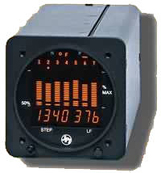
On all TB aircraft the factory CHT/EGT instrument is a factory option and thus any replacement thereof does not need to be STCd as a primary CHT/EGT instrument. The TB21 is the exception to the foregoing whose factory gauge cannot be removed. The EDM700 also has a "blanket" UK CAA approval (URL local copy) which makes it easier to install on EASA-registered TB aircraft.
Update 4/2013: as of 2009, the EDM700 is available in two sizes: the original 2.25" version and the larger 3.125" version. JPI can rebuild the small one into the larger one for $368. The serial number on the returned unit is the same and since it is also called "EDM700" it is a non-issue in paperwork terms. I installed the larger one in 2013. Old New.
Fuel Totaliser: This is another virtual necessity for anybody who does serious flying. The Shadin system was factory installed on most of the later TB20GTs. This is the Microflo-L from Shadin:
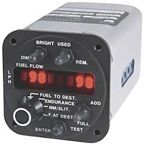
One can also get fuel flow using a version of the EDM engine monitor from JPI. This is a popular install although my view is that a separate fuel flow instrument is better; the JPI 2-button user interface is horrid which is OK given that it is almost never touched during flight. All fuel flow products I have seen use the same turbine transducer, from Flo-Scan, and this transducer needs to be installed in the right place and on the TB20s this was never done at the factory. One can have some fun with this, although on an N-reg airplane the solution is straightforward. Some notes on fuel flow instrumentation are here.
406MHz ELT: This is coming in for both Euro- and N-reg aircraft. FAA rules have long mandated an ELT but the 406MHz requirement is new. On the TB GT range, Socata used to fit an Artex ELT-200
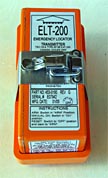
which all GT aircraft were prewired for. This very low cost unit is 121.5+243MHz and will need to be changed. The most "obvious" replacement is the Artex ME-406
which is a 121.5+406MHz unit and is claimed to fit onto the same mounting points. According to the Artex data sheet and emails I've had with them, this unit should also use the existing ELT-200 wiring and instrument panel switch cluster, but this turns out to be false and one extra wire is required, which is missing in the TB20 wiring and requires the two RH seats to be removed, the trim removed and it's a significant job. The Socata wiring harness contains is a 3-core plus shield cable and one solution might be to use the shield as the 4th conductor but I have not managed to get Artex to supply information on what the signals do so it was not possible to work out which of the four connections could be safely run through the shield. Anyway, it isn't a good idea because the external insulation could be abraded to the airframe somewhere...
Many older TB20s were custom wired for the old Artex 110-4 and these installations reportedly have enough wires for the ME-406.
Fortunately there are other ELTs. The Kannad 406-AF COMPACT
definitely uses just 3 wires, so the Socata wiring is usable directly as described here. The size is similar to the Artex ELT-200 but it was only after mid-2009 that the base plate was modified with the same holes as the ELT-200. The instrument panel switch is different to the Artex one but its mounting hole and the four screw holes are compatible with Artex. The pricing of the two ELTs is comparable, even after allowing for Kannad pricing the switch and antenna separately whereas Artex seem to sell a whole kit. The battery pack for the Kannad costs €300 (1/2016).
The larger tri-band (121.5+243+406) ELTs
which were popular a few years ago are not worth installing because 243MHz monitoring ceased in 2009, and they need an adaptor bracket to be made which some avionics installers like to turn into a major structural certification project... They also cannot use the simple whip antenna which complicates the installation further. Most of these ELTs have been discontinued.
One possible enhancement would be an ELT which accepts GPS data input and radiates the last (pre-crash) position; these cost a bit more but would require quite a bit more wiring labour because the only access to the GPS (NMEA) data stream is from the KLN94 or the KMD550, inside the instrument panel centre stack (it can be done via the KMD550 hole, just about).
GAMIs: This is a highly recommended upgrade which costs about $1000. GAMI sells a set of fuel injectors selected to balance up the air/fuel flow to the six cylinders. This improves fuel consumption, reduces vibration, and enables smooth operation in the LOP (lean of peak) region. Some notes on engine management are here.
TCAS: The Ryan/Avidyne 600-series system is the most popular and costs around £10k-£15k depending on who does it and whether N-reg or G-reg. This is a significant installation job which involves moving around existing antennae; basically the whole aircraft interior needs to come out so it needs to be done by an avionics shop who you really trust. I installed the Avidyne TAS605 system in 2012 - report here.
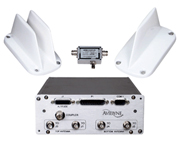
GPWS: The comprehensive solution to this is the Honeywell IHAS system (which can also include a TCAS module) which costs around the same as the above. I eventually obtained a similar functionality by fitting a £1500 Garmin 496 into the yoke and connecting its audio warning output to an unused output of the aircraft intercom.
EHSI: This is an electronic replacement for the Bendix/King HSI, and the two main options are the Sandel SN3500 (local copy) and the Honeywell KI-825 (review)
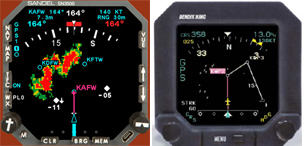
These products provide a course pointer which slews automatically to the new track, at each waypoint. They also provide RMI functionality with remotely mounted ADF and VOR receivers, and other stuff like the display of the GPS track, stormscope data, etc.
The Sandel SN3500 costs around $9000 in the USA; around £15000 installed in the UK. The original remote (mechanical) B/King gyro module is retained although Sandel now offer the SG102 replacement. A reasonable economic excuse for an EHSI would be to replace an ailing HSI. The original Sandel SN3308 suffered from poor backlight lamp life and a poor viewing angle but the SN3500 has a much better display and the current version uses LED illumination. The SN3500 can also be switched to look like a horizon (if you also have the new SG102 AHRS gyro).
This article describes the installation of a Sandel SN3500 EHSI in a TB20GT aircraft. The SN3500 is an excellent instrument which has not given me any trouble. One can also install such an EHSI on the RH side (and move the altimeter to its more appropriate location) to create a usable "pilot panel" and this is a Minor mod (N-reg) so long as there is no autopilot connection to the RH EHSI. Near the end of this article are notes on the SG102 also, which works superbly. The Sandel products are very high grade hardware and a level above normal GA avionics. Update 2025: The SG102 reliability is not great, due to a poor design of the heated gyro section - here. A spare unit is definitely needed, and fortunately they can be found for around $1000 on the used market.
The Honeywell KI-825 suffered from a flimsy rear connector design which was prone to disconnection. It appears that the KI-825 is now poorly supported by Honeywell... it is also overpriced, listing around $18000 plus installation. Nobody should be installing the KI-825 today.
GPSS/Roll Steering: With the standard TB20 HSI installation, the GPS flashes a message shortly before each waypoint and the pilot needs to turn the course pointer (CP) to the new track, and the message goes away. This is because when the autopilot is in NAV mode, it effectively uses the CP for the heading, and after it has turned onto the new heading it uses the HSI deviation bar signal to adjust the actual heading as required, and this takes care of wind drift etc. An EHSI provides a CP which flips to the next track automatically so you get hands-off automatic waypoint sequencing, with the aircraft turning at each waypoint. The pilot workload reduction is however insignificant - in the context of the very limited KLN94 database support for complex terminal procedures which as a result are often flown using ad-hoc methods e.g. the HDG mode, or in NAV+OBS mode.
However - be careful with the terminology: having an EHSI whose course pointer automatically flips to the new track shortly before each waypoint works fine for enroute flying (GPS set to 1nm or 5nm full-scale, and no severe directional changes), but it is not the proper predictive steering which may be needed for accurate tracking of approach procedures and holding patterns. The autopilot needs to be controlled direct from the GPS and not via the HSI/EHSI. In the TB20GT context, the options are: (1) KLN94 analog roll steering connection to the KFC225 or (2) a Garmin x30 digital (ARINC) roll steering commands to the KFC225. With older autopilots, one of the roll steering converters e.g. the GDC31 which accepts the GPS data and fakes a heading bug, and uses an autopilot in the HDG mode, may be used (but these converters are claimed to not work with a KLN94, allegedly due to its infrequently updated GPS output). Some notes on how an EHSI installation (without roll steering) performs in turns are here.
The KLN94-KFC225 analog roll steering connection requires a KLN94 P/N 069-01034-0102 (which can be done as a software upgrade from the 069-01034-0101 most commonly installed) and is only a few wires, shown at the top of here plus a config change in the KFC225. According to reports from the few people I know who have it, it does work well enough to fly the standard T-style GPS approaches. If this is used with a mechanical HSI, the HSI course pointer is totally ignored by the KFC225 (it still functions as usual in VOR/LOC modes) which is not ideal for situational awareness. If an EHSI is being fitted, there seems to be no downside to it because if you don't like what the autopilot is doing, you can always switch it to the HDG mode. There is no doubt that situational awareness is compromised by having a "dead" HSI course pointer, which makes GPSS in conjunction with a mechanical HSI a slightly dodgy idea...
With all "EHSI" products, be careful as there are often gotchas in the autopilot functionality. Generally, any VOR/GPS navigation source which can be selected on the EHSI will automatically be capable of driving the autopilot, and one needs to get this functionality exactly right to avoid side effects on other avionics. Many avionics shops have a poor understanding of this area.
This extract from JAA TGL10 document suggests an auto-slewing course pointer (i.e. an EHSI) is required for European PRNAV airspace, but offers "an acceptable alternative" avoiding it. During 2008/09 there has been variable interpretation of this concession between avionics shops and certification authorities but now it is "becoming accepted" that an EHSI is not mandatory on both Euro-reg and N-reg aircraft.
An alternative EHSI / EFIS solution is the Aspen EFD-1000
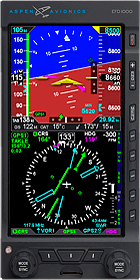
which is a kind-of "halfway glass cockpit". In the TB20GT it has the potential for replacing both the mechanical HSI and the KI256 vacuum horizon; in 8/2010 their EA100 Adapter has finally, after years of promises, been certified for this (see KI256 notes below). Because the EFD-1000's internal 30-minute battery doesn't meet the regs for a backup instrument, a vacuum horizon is still required in the pilot's primary view, but it can be a "cheap" Sigma-Tek one. In the UK, the CAA (acting on behalf of EASA) requires the vacuum horizon to be mounted horizontally adjacent to the AI portion of the Aspen (some details here) but I know of pilots who have tackled EASA on this and won. The article also mentions some autopilot issues...
The EFD-1000 has not proved to be reliable in the field, and looking around at owners I know personally it is probably worse than the mechanical instruments it replaces. There are too many reports indicating major QA issues at the factory. There have also been persistent reports of problems with its rooftop-mounted sensor unit, which contains sensors for several parameters, plus the fluxgate magnetometer compass. Notably, the OAT sensor has been reading way out, which is perhaps not suprising given that the whole thing is flat (like a GPS antenna) and the sensor is not protruding into the airflow. The issues with this product had gradually improved into 2013, however. It does retain a bizzare failure mode whereby a loss of pitot data (e.g. due to pitot tube icing) causes it to fail as a pitch/roll indicator thus rendering it almost useless; this is an artefact of the way Aspen use airdata (airspeed, heading, etc) to generate an artificial gravity vector to erect the AHRS gyro in unaccelerated flight.
How to get rid of the KI256 vacuum horizon / flight director: this is the pitch/roll source for the KFC225 autopilot. It is a very clever instrument, in production since the late 1970s, but with a very variable reliability - largely due to defective bearings and poor workmanship from many overhaul shops.
The P/N used in the TB20 is 060-0017-01 and (2010) it lists at $24000 new! An overhauled exchange unit is about $3000. An overhauled outright purchase is about $5500-6500, depending on whether it has Mod 11 fitted. Mod 11 improves the pitch/roll output drive capability and while it does not appear to be necessary for driving the KFC225, looking at the schematics it is obvious that a unit without Mod 11 is far more likely to result in the KC-225's pitch and roll pots having to be adjusted when the KI256 is changed. Also, Mod 11 is a whole new circuit board and is thus worth having; in fact an overhauled KI256 with Mod 11 factory installed can at least be assumed to not be a totally knackered 1970s unit...
I can confirm that a correctly adjusted Mod 11 unit can be swapped for another one, without the KC-225 computer requiring the extensive ground based recalibration. This was unheard of with earlier mods. My experience is that the best source for an accurately calibrated KI256 is Castleberry Instruments.
Castleberry Instruments make the 900-23EVPK
which is identical to the KI256 except that - in common with most electric
horizons - it has a caging knob. This is a modern version of an instrument called
KI-254 which Castleberry used to make, for Honeywell, years ago. The unit is
TSOd but the installation in a TB20 as the primary horizon would involve considerable
paperwork. As a backup horizon, no problem, but there is no obvious legal route
to connecting it to the KFC225 autopilot which is exactly why you might want
to do that in the first place
Technically it would be trivial to install a changeover switch, driving a multipole
relay, so that either the KI256 or the electric horizon will be operating the
autopilot.
Ideally, and to preserve the natural redundancy provided by a vacuum-powered horizon, one would power the above from a small alternator mounted in place of the vacuum pump. There are at least two companies making vacuum pump mounting compatible alternators; GAMI has one - the Supplenator - which delivers a reasonable quality DC output without needing a battery to smooth it, but its approval status is unknown. B and C is another, offering some certified vacuum pump mounted alternators but there is an issue on the -C4D5D engine; see here for more details. Basically you need to either remove the vacuum pump (by installing an avionics solution which doesn't need it) and then fit the B&C alternator there, or get your hands on a variant of the IO540-C4D5D which does not have the blank shaft in that location but has the optional proper drive shaft. This one (local copy) seems visually identical to the GAMI product but its vac-pump-mounted units are uncertified.
Aspen have for some years been talking about getting their EFD-1000 (see above) certified as a replacement for the KI256 and as of 8/2010 their EA100 Adapter is FAA certified. There is a built-in battery backup but this does not meet the requirements so a vacuum powered horizon is still required to be installed next to it; alternatively a larger remotely mounted battery can be used.
Garmin offer a certified solution using their G500/G600 glass panel products. Their GAD-43 (local copy) autopilot converter (article local copy) is certified as a KI256 replacement. However, installing a G500 etc is a hugely expensive solution to this issue - around £25k for a basic install, on top of which is a mandatory Garmin 430W/530W or a GTN650/750. Some notes on this are further below.
Honeywell offer the KFD-840; see notes on it further below. Honeywell dropped its price soon following introduction, from $16k to $11k, presumably realising that most new installation were going to Garmin's G500. With its latest firmware (which was not present in the initial versions sold) it can emulate the KI256, with an add-on external adaptor. Update 11/2010: the KFD-840 is having some major issues and is being limited to "VFR only". Update 2013: the KFD-840 appears to have been discontinued.
A final, ridiculous, option is the Honeywell KVG-350 remote gyro
which would cost at least $30,000. This unit needs 110V AC, for example. These gyros were installed on a few German TB20s which had the EFIS-40 avionics; these were operated by a flying school.
The basic safety issue is that the vacuum pump and the KI256 vacuum driven AI provide a perpetual (no batteries) backup for a total electrical failure. Knowing the pitch/roll attitude, the rough power setting (the RPM indication will be lost too), the airspeed, one can continue flight to a landing or until the fuel is exhausted. With a handheld GPS one has navigation. With a handheld radio one has communication. Unless one installs a second alternator (as mentioned above) this safety net is lost. More FAA-related details here. Regarding "glass cockpit" upgrades, this is what I have found out so far:
If you have an electronic display instrument such as the Aspen or G500, there must be a standby attitude indicator that is powered by a source other than the one that is powering the Aspen or G500. The second power source must be independent of the first, such as pneumatic, a dual bus with dual alternator and battery that are isolated from failures of each other, or an independent backup battery system that is charged by the main system and indicates to the pilot that power is being provided by the backup battery. This requirement comes from FAR 23.1311 and applies to all glass systems.
If you install a dual Aspen, one as a EFD1000 PFD and the other as a EFD1000 MFD and the EFD1000 MFD uses an approved external battery backup system (the internal battery in the EFD1000 MFD is not installed because it doesn't meet the power requirements), the EFD1000 MFD has its own ADAHRS and has a PFD reversion mode fully duplicating the EFD1000 PFD. This configuration meets the requirement of FAR 23.1311 and a standby Airspeed and Altimeter is not required. Currently a standby Attitude indicator is still required, but Aspen is planning [12/2009] on obtaining certification for this configuration where the standby attitude is also not required some time in 2010. Around the same time, they are anticipating that the KI256 attitude signals required by the autopilot will be available and the KI256 will be able to be removed.
None of the above options are cheap or easy to do, and a reasonable forward strategy is to obtain a spare KI256 and keep it on the shelf, ready for a swap. As previously noted, this should work fine if both units are Mod 11.
In 2016 the KI300 appeared, which is an AHRS replacement for the KI256. This is a good option for those who want remove the KI256 in the simplest possible way. It's not cheap... However in March 2018 it is still vapourware, like almost everything that Honeywell have announced for the GA marked in the last 10 years... EuroGA thread on KI300. Feb 2019: it is a re-badged Sandia SAI340 and need a KA310 adapter to emulate the KI256.
Replacing the KG102/KG102A Gyro: This heavy component is a part of the KCS55 slaved HSI system. In the TB20GT, it is located in the rear, next to the pitch and pitch trim servos. Sandel are offering the SG102, pictured here complete with a MT102 wingtip-located fluxgate magnetometer module
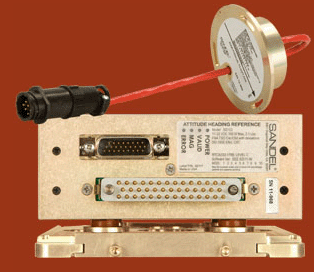
The SG102 is an excellent plug-in replacement for the KG102 (though it requires the MT102 to be installed and wired directly to the SG102) with the exception of systems requiring a stepper motor drive. The SG102 is also required for the Sandel SN3500 EHSI if the "reversionary AI" mode of the SN3500 is to be used. I installed the SG102 in 2013 and it works perfectly. According to Sandel, if the SG102 is used to replace a KG102A, the installation is a Minor Alteration which greatly simplifies the certification process.
There can be some nontrivial issues concerning replacing the KG-102 gyro which need to be checked out at the time - if you do not want to get caught with having to keep the KG-102 for the autopilot. A comprehensive G500 installation replaces the KG-102 with a Garmin product which also involves the GAD-43 converter.
The SG102 supposedly cannot do an "air start" i.e. if power is momentarily interrupted during a flight, it does not recover and any instruments which it is driving remain useless for the remainder of the flight. This is why it cannot be used as a pitch/roll source for a horizon or an autopilot. However, it does actually restart OK in straight and level flight. Usefully, it contains an internal power reserve of about 30 seconds.
The SG102 is a great product which outputs the heading in digital ARINC429 form and the "compass swing" is done in the SG102 with a laptop. There is no need to fiddle with anything in the front of the aircraft. It also outputs the old-style XYZ/400Hz heading for items like the WX500 stormscope and the KMD550 MFD. A description of a SG102 installation is at the end of here. However, as mentioned further back, the SG102 has a design defect which impacts its reliability.
8.33kHz Radio: In Europe, this will be mandatory for all Eurocontrol IFR flights from 2014 and as of 2013 Eurocontrol refuses a flight plan if it is filed without the "Y" equipment specification. There is a threat to mandate 8.33 for all flight including VFR, according to this (local copy) by 2018. The UK CAA guideline is here (local copy). Luckily, the KX155A radios can be plug-swapped in minutes for the KX165A/8.33 model, which one can pick up from the usual U.S. sources for around US$4,000. But the older KX155 (non-A) model cannot be swapped for a KX165A! A TB21 requires 8.33 from 2008, due to its higher ceiling. Even VFR aircraft must have 8.33 on any new radio installation, or on any replacement of a radio unless of the same model of radio - reference.
I can confirm a KX165A replaces a KX155A without any aircraft modifications. Its audio quality is "different" to the Socata-original KX155A and arguably not quite as good but it is perfectly OK. The new displays are nicer. In my case, however, the 165A had to go into the lower of the two radio positions, otherwise the NAV1 VOR (the HSI) did not work. The cause was never proven and there was no point in trying to hunt it down; it is most likely a configuration issue. If trading-in the old KX155A, check with the vendor that he will accept your particular KX155A S/N because the units which Socata installed are now rather old (1999-2001) and according to Honeywell suffered from transmitter failures, and avionics dealers don't like to take these radios back unless the S/N indicates the later (fixed) version (S/N 24000 onwards).
A small detail is that a KX165A contains the functionality of the KN-72 VOR/LOC signal processor and installing it in the upper radio position enables the removal of the KN-72 which (on a TB20GT) is under the pilot's seat. However, this would be a lot of wiring and is hardly worth doing. A smarter way to get rid of the KN-72 is to install the SN3500 EHSI and use the EHSI's FCS outputs to drive the autopilot.
There are other 8.33 radios; for example Garmin introduced some in 2013. But they are not plug-compatible with anything already in a TB.
Backup Vacuum: This is a second electrically driven vacuum pump. It's not a bad idea because the autopilot requires the main horizon which is vacuum powered so if the standard vacuum pump fails, you lose the autopilot as well. It's however bulky and heavy... an alternative approach is to replace the existing vacuum pump every few hundred hours. Vacuum pumps are cheap enough to replace at every Annual if so desired.
TKS: The TB20 came with prop-only TKS de-ice. The full TKS system costs around 50k+VAT euros if installed at a German company which is the agent for CAV Aerospace, but you can do it for much less if you buy the parts from CAV, which they are variously reluctant to get involved in. The aircraft is certified for flight into known icing on a G-reg but not on an N-reg (the FAA requires things like two alternators). This is probably the greatest mission capability enhancer but it also knocks about 50kg off the TB20's payload. A TB21 with full TKS loses around 100kg relative to a TB20 without TKS, and is thus practically a 2-seater only (albeit a very mission capable one).
GNS530W: This is the latest reincarnation of the old GNS530 and together with WAAS/EGNOS supports GPS approaches with vertical "synthetic glideslope" guidance (LPV). However, LPV approaches are barely operationally relevant in Europe (12/2013). The 530W can also drive the autopilot to fly holding patterns; an impressive feature which would be handy if the need to fly them in the first place was not so incredibly rare. It can fly only published holds, not holds at an arbitrary location. For someone looking to replace the centre stack of a TB20GT with something totally up to date for RNAV Transitions, PRNAV etc, and getting 8.33 capability at the same time, one or two of these would do it nicely.
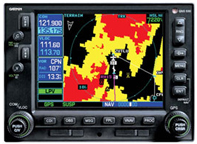
Unfortunately the 530(W) is about 16mm taller than the KLN94+KX155A (2" each) so this rather obvious equipment replacement (for TB20GT owners with the Honeywell option) would be very tight. A 430 would fit in fine though, but would require a blank spacer in the stack; such a spacer would be handy for mounting odd connectors like the EDM700 data download, etc.
If installing a Garmin 430/530 family GPS, some pilots may want to retain the KMD550 MFD because of its superior mapping for European VFR operations (VRPs, etc). The KMD550 does work on the GPS output stream from the Garmin but some functionality is lost. I have not been able to establish the full extent of this (I know only one TB owner who has done it) but it appears that the KMD550 continues to work as expected except when the Garmin is in the OBS mode, when the KMD550 doesn't display the "magenta line stuff" correctly or at all. The KMD550 may be worth retaining for other features e.g. as a separate stormscope display.
Garmin discontinued the GNSx30/x30W range in late 2011. Database support is expected to continue for many years. Used units sell for quite a lot of money.
There is an interesting factor which can lead to choosing the GNS over the GTN units: the GNS crossfill protocol has been reverse engineered (hacked) which has opened up the way for electronic flight plan loading. For example Voiceflight offer a rapid way to enter flight plans (though their European support is somewhat undefined, with a $25/month charge for some Jeppesen data required to make it work - 12/2013). Garmin have closed off this option on the GTN units. Garmin offer electronic flight plan loading too but it is a clumsy process, requiring the unit to be power cycled.
Garmin GTN650/750: Today (5/2014) these are the logical upgrades for Europe, due to their AML STC and ready-to-eat approvals for PRNAV and LPV.
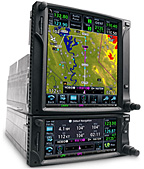
Both are touch screen units, which most pilots are OK with but some hate it... The GTN650 is rather small and the use of the screen as a keypad makes it even smaller. The GTN750 is vastly better than the 650 and can be used as a viable MFD - albeit with extra button pushing and without the permanent functional separation which you get with a GPS+MFD installation.
In the TB20, a KLN94+KMD550 is 6" high and a GTN750 is 6" high so would fit into that space nicely. There is little doubt that the GTN750 is the leading contender for any major European avionics upgrades.
A useful comparison is here (local copy).
Avidyne IFD440/540: The Avidyne IFD440/540 and the Honeywell KSN770 were heading for the same market but the KSN770 more or less died. The IFD540 is much better however and in most respects slicker than the GTN750.
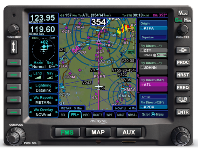
The IFD440 has the same issue as the GNS430 and the GTN650: too small to be the only GPS unless you are absolutely desperate. The GTN650 and the IFD540 make a nice "semi permanent keypad" underneath the GTN750 and IFD540 respectively!
Interestingly, two of the IFD540s would fit into the TB centre stack provided both KX radios, the KLN94 and the KMD550 were all removed. This would deliver a nice "GPS+MFD" functionality. Avidyne just need to get this box out sometime!
If you really want an MFD then you have to settle for an older product because nobody is developing MFDs now. The Avidyne EX600 is a nice one but there is hardly any point since an IFD540 does so much more.
Garmin 480: This is an powerful product which originally came from Apollo, which Garmin bought and then shut down to kill off a competitor.
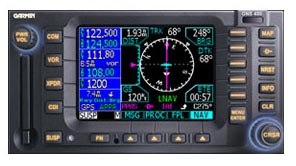
It was years ahead of everything else and remains so in many respects. It can fly unpublished (arbitrary location) holds for example. Unfortunately for Europe, it's radio is not 8.33 capable which means - setting aside the whole argument whether you need one or two 8.33 radios - it cannot be used to meet the 8.33 requirement.
The GNS480 is out of production although database support is expected to continue for many years. Used units sell for quite a lot of money.
Garmin G500/600: For those with 5 figures, plenty of time for downtime, and an appetite to push the boundaries of UK avionics shop "expertise" and "project management", the new Garmin 500 and 600 products would provide a really modern glass cockpit solution. Currently, however, Garmin do not sell their new autopilot as a retrofit product but they do sell a module (see notes on KI256 above) which can interface the Garmins to the KFC225 or similar autopilots. I would caution anybody considering this level of upgrade: it makes no sense unless you are going to get the absolute works in terms of legal mission capability and this means GPS approach approval and PRNAV, and (2010) this is a poorly understood area. Don't even consider an upgrade of this size unless the avionics shop can demonstrate this level of technical and paperwork capability, and make the aforementioned approvals an essential contractual requirement. The G500 has been installed in a number of TB20s in USA, Europe, and Australia.
There is a significant downside to "glass cockpits" which will affect some owners more than others, depending on what avionics facilities are available at their base airport: With the "old" avionics, and this includes the latest "separate" units like the Garmin 530W, the installation and maintenance manuals circulate widely around the internet. I have a huge collection myself. This enables almost any freelance avionics fitter to do installations and subsequent maintenance. Regarding approvals (logbook entries) the really "small" installers with no own approvals tend to work inside the hangar of a normal maintenance company and under the approvals of that company. However, a great deal of minor avionics "fixing" is done informally (off the books) because it is untraceable, everybody is happy, and this "informal maintenance flexibility" represents a very important operational advantage through the elimination of hugely wasteful flights to official dealers, hanging around in hotels, etc. It helps hugely in AOG (grounded aircraft) situations. It is very easy to replace most individual instruments with either new or overhauled units, purchased outright or as an exchange, and most items can be purchased from the USA. However, with the glass avionics, the manufacturers have massively tightened up on the distribution of the installation/maintenance manuals and now they go only to the dealer authorised for that specific product category. Garmin even did a sweep of websites carrying copies of their old manuals and requested their removal. This means that the small local avionics installers cannot work on this equipment (unless the fault is really simple); if something goes, it means a flight back to the avionics dealer. 3/2011: A lot of G500/600/1000 installation manuals have "escaped into the wild" but one still needs a Garmin dealer to set up some software features, using key codes not available otherwise.
Update 1/2010: Socata in France are offering a very neat factory Garmin G500 refit
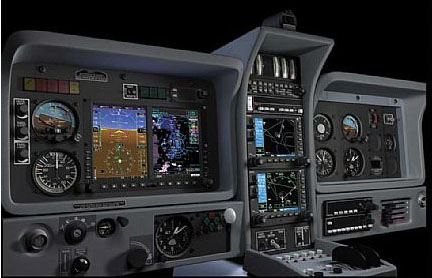
It retains the vacuum horizon as per the certification requirements but the KFC225 is now driven from the G500. Interestingly it offers a dual GNS530 GPS configuration; something which was difficult to obtain an EASA approval for in the past. I will add more information when I get it from the factory, but it would be interesting how good the KFC225 autopilot integration is, and whether they offer PRNAV approval... This document (here with permission from Socata) contains more detail.
Honeywell KSN770: This is a new product (website) (brochure) which Honeywell have been promoting for years but its availability has been severely delayed and at time of writing (12/2013) it is not certified, despite widespread advertising
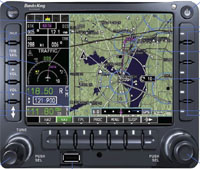
It is like a Garmin 530W (radio and GPS, basically) but much better, and with a vastly better display with VGA (640x480) resolution. It appears to have a great potential but in view of Honeywell's dubious commitment to the GA market (evidenced by a near total lack of new product development during 2000-2009, as well as washing their hands of the notoriously unreliable KFC225 autopilot after just a couple of years) which resulted in it being handed on a plate to Garmin I would give this product some time (a few years) to get debugged by other pilots...
The KNS770 was originally announced by Honeywell in 2008. They then discovered (according to a source inside Honeywell) that the contractor who developed it wrote the software in a manner which prevented it getting certification. So it was dropped. In late 2011 Honeywell got Aspen to pick it up and re-hash it and now it looks better.
However, my impression of the KSN770 (exhibitions, 2014) are a poor user interface with a poor touch screen and it doesn't compare with the Avidyne IFD540. 2023: Despite Honeywell spending a reported "tens of millions" on finishing it off, the KSN770 is dead.
Honeywell KFD-840: This is another new product (website) (brochure) (pilot's guide) which is "apparently" certified. It is presumably intended to be installed in conjunction with the KSN770 above. It looks great but I would give it some time in the market...
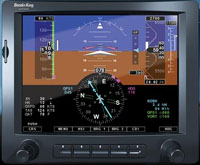
12/2010: rumours suggest this product has been abandoned by Honeywell, due to software bugs. Apparently, the KFD-840 cannot do an "air start" i.e. if power is momentarily interrupted during a flight, it does not recover and any instruments which it is driving remain useless for the remainder of the flight. This is a major certification issue if used as a pitch/roll source for a horizon or an autopilot.
7/2013: I have been told by Honeywell that the KFD840 has been dropped totally because the subcontractor who manufactured it has discontinued it!
Chelton: A couple of N-reg TB20/21 owners have installed what was at the time an amazing system from Chelton. As with any major retrofit, the cost is way into 5 digits, however. Some - Garmin fans in particular - argue this is a dead end since Chelton make most of their money in the military helicopter market and are unlikely to be long term committed to supporting piston GA. Also, their products have a significantly different user interface to the current crop of Garmins etc. There are other similar high-budget avionics options. These are "EFIS" products and a separate GPS is required. This is a rather poor image from a Chelton equipped TB21
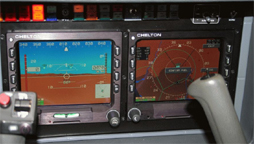
In many ways this unit was years ahead of anything from Garmin - for example offering flight plan loading (via a flash card). Now, 2013, it is mentioned here for completeness only; anybody installing it now is a fool.
EFIS-40: It appears that a professional flight training company in Germany has fitted several TB20s with the rather obscure (in this class of aircraft) Honeywell EFIS-40 system
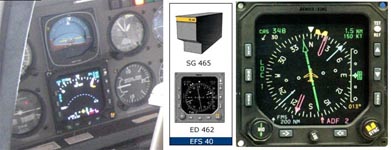
and these planes have gradually appeared on the market. This expensive and outdated product was discontinued by Honeywell years ago and they do not support it, although the components can still be found overhauled. It is not a full "EFIS" installation anyway because the old KI256 horizon is retained. It is basically just an EHSI and the Sandel SN3500 is much better. The EFIS-40 system can be found on TBM700s and similar aircraft.
Air Data Computer: This is a box which takes in various data and interfaces to the GPS, to present various items such as wind speed/direction, TAS, TAT etc. The Shadin ADC-200 is probably the most popular "box" but they also do an attractive panel mounted version: the Digidata, which also does fuel flow. If you get this installed on a TB20, make sure the fuel flow transducer is installed in the right place as per the Shadin STC. I don't think an ADC provides any information relevant to flight at the speeds in question which is not obvious from existing sources; the GPS-calculated "fuel at destination" figure is still based on the current ground speed only regardless of what the remainder of the programmed route looks like in terms of heading (i.e. wind effect) changes, despite the fact that the ADC has calculated the wind data and sent it to the GPS. This is the Shadin Digidata:
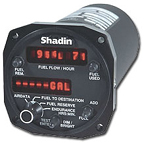
Update 4/2013: the Digidata has been discontinued...
Air Conditioning: This is more common in the USA than Europe. As with cars, it is a nice thing to have when operating in hot climates. Some names to check are Keith, WestAire and Aurora. Keith Products is the original factory units so they could be added as they are part of the aircraft Type Certificate - Option F874 00M. Aurora Aviation has an STC SA10197SC - more info here. West Aire Systems has a STC SA4072NM. Aircon is an expensive option, adds a lot of weight, and from users' reports the equipment does not appear to be anywhere near as reliable as the aircon systems on modern cars.
In-Flight Weather: Unlike the USA, Europe does not have a satellite weather data service. One German company, MT, offers a service based around their own weather data servers and their own custom made tablet computer but this is an expensive product as well as being very hard to fit anywhere inside a TB20 cockpit. Avidyne are now offering the MLX770 system which is similarly priced to MT's; it is a clean solution although installing any of the compatible MFDs would be a significant avionics job in a TB20. I have developed a workable low cost in-flight weather (METARs/TAFs/radar/sferics) data display system, using a handheld Thuraya satellite phone, optionally with a specially developed web proxy which presents the data in a compact form. It works well, and for long flights, this is a feature you will not want to be without once you have used it.
High Intensity Gas Lighting: There are several systems on the U.S. market - example. This partly overcomes the TB20's poor left-wing-only landing/taxi light cluster. The certification is easy on an N-reg but I am not aware of anybody having done it on a European reg.
A more radical modification is the fitting of a second identical light cluster to the right wing - this has been done by a friend of mine on a US-based TB10 and the paperwork was awesome even on the N-reg. Technically it is fairly trivial to do.
LED Lamps: These have been around a few years but certified versions became available only in 2011. On the TB20, the standard landing lamp is a GE4591 which costs about $30, which is also available in a higher efficiency quartz/halogen version as a Q4591 for about $80. One LED replacement is a Teledyne Alphabeam 2307055-1 URL local copy which is over $300 but should last "for ever".
A possibly more powerful LED is from Aero LEDs. These draw 1.6A/3.2A at 24V/12V respectively. The P/N is SunSpot 36LX and both the landing and taxi light versions use the same P/N (URL local copy). One TB owner reported on these very favourably in 2013; installed in the USA as a minor mod. I installed the 36LX lamps in 2013 and the result is spectacular - see here. The problem is that these lamps draw a lot less current than the old lamps and the cockpit annunciators no longer work - more details here.
LED Instrument Lamps: These do exist (example local copy) but do not seem to work when the Day/Night switch is in the Night position. At night, they do not seem to illuminate at all, due to their high on-threshold voltage. However, at time of writing (1300hrs) I have not yet replaced a single one of the original lamps, probably because they are 24V lamps fed with about 21V max which would drastically increase their life.
Illuminated Wingtips: On the TB20GT this was a factory option. The wingtips are the same as the GT ones but they each contain a small conspicuity lamp which makes the aircraft more visible:
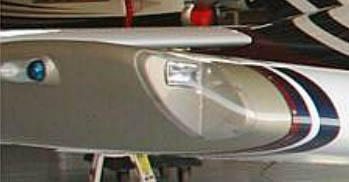
The really interesting thing would be installing powerful (LED) landing/taxi lights inside these wingtips. Due to the taxi light deficiency of a TB (near-impossible to turn right onto an unlit taxiway at night) one would probably fit wide-angle taxi lights rather than landing lights, and wide-angle lights would also be more visible in flight. Obviously it is possible, but with what paperwork? The full-size LED lamps mentioned above would not fit. The kit for installing these wingtips, including the electrics, is an outrageous €8000 and nearly all of that are the two wingtips.
Standby Alternator: The TB20 has 3 electrical buses but only one alternator and one battery. It would be great to fit a second/backup alternator but nobody has yet reported having done the paperwork successfully. I have embarked on a project to see if the B&C BC-410 unit can be installed
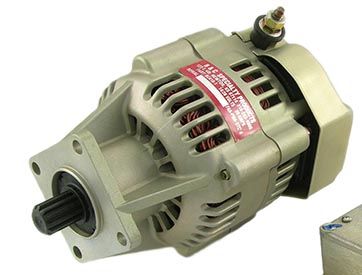
This unit fits onto a spare vacuum pump drive point (which the TB20 does have) and generates "20A" (15A on real installations on this type of engine, net of the 3A field current and at 2575rpm). It comes with its own voltage regulator which is set about 0.5V below the existing one (i.e. to about 27.5V) and the system thus automatically takes over should the main alternator fail.
However, this (or any other similar) alternator cannot be fitted to the stock IO540-C4D5D because Lycoming stupidly put a blank shaft into the spare vacuum pump drive which can be rectified but it is a job requiring the engine to be removed and opened... The correct shaft is in the engine IPC as an optional part and any US engine shop can to fit it when the engine is opened for some other reason. Also some engines were built, many years ago, with the shaft factory installed. Progress report
RHS panel: It's nice to enable someone to fly the aircraft properly from the RH side, and in 2013 I re-did the RHS panel with a second Sandel SN3500 EHSI, moved the altimeter into the "right" place, and cleaned things up. The result is impressive
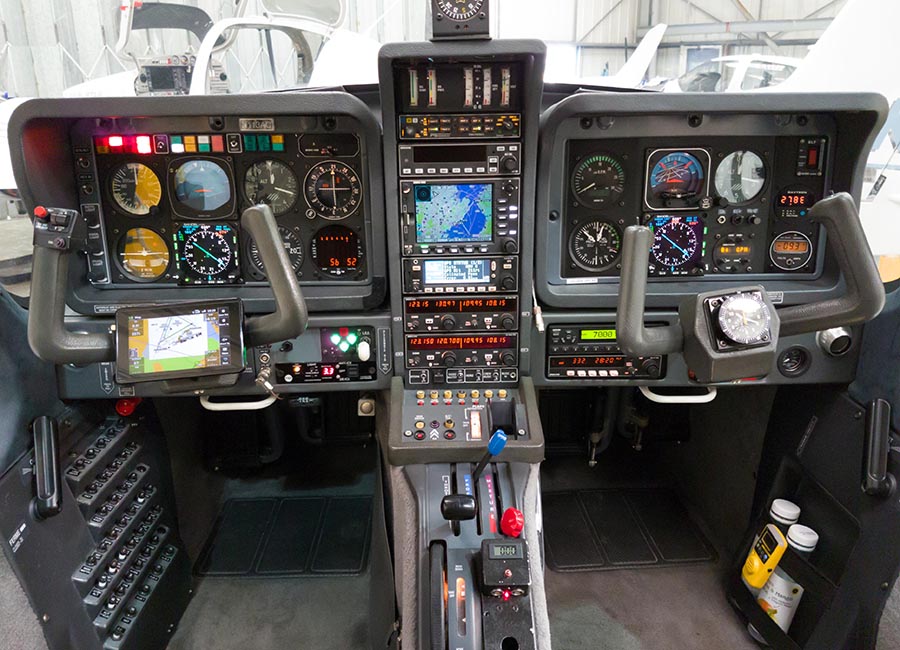
The above also shows a Garmin Aera 660 in the LH yoke. I had been flying for 15 years with a Garmin 496 there but the Aera 660 is nicer, and runs the Garmin SafeTaxi software which is really brilliant.
The RHS EHSI can display everything the LHS one can, with the added simplification that it is not limited by the NAV/GPS switch and can display more sources e.g. GPS1/GPS2/NAV1/NAV2 - all with deviation bars, and with ILS on both NAV1 and NAV2.
The installation of the SG102 was done at the same time. This is all a Minor Alteration, provided that the RHS EHSI does not drive the autopilot. If it did, a new autopilot AFMS would be needed which complicates life massively.
Full TKS This was installed in January 2018. It is an outstanding enhancement. I have had ice accretion rates of say 2cm every 5 mins but the protected areas were totally ice free. Not easy to do however, and you need a smart engineer/mechanic to do it right. The parts were bought from CAV Aerospace in the US. I did it together with my A&P/IA and it took us about 5 weeks. The main challenge was buying the parts from CAV, who took 1.5 years to deliver everything! Indications are that CAV don't supply these parts anymore. There are various gotchas involved, e.g. the titanium panels which need to be very carefully formed to fit the leading edges. Most owners of this system report a 5-7kt speed loss but I got no measurable speed loss at all, and looking at some of the other installations I think I know why... The general writeup on the installation is here, and a discussion on performance effects is here.
Portable equipment: This is something else and numerous items were obtained: a life raft, an emergency bag with a GPS, a radio and an EPIRB, and a portable oxygen system which is practically and legally necessary for flying IFR around Europe in the FL100-FL200 region. Plus a comprehensive toolbox good enough for replacing common items like spark plugs and the vacuum pump. And spare autopilot servos! I also purchased a lightweight reflective cockpit cover from Bruce's Custom Covers in the USA which keeps the cockpit cool when parked in hot climates, and stops inquisitive eyes seeing inside and spotting all your expensive kit. Sun does as much damage to the interior as humidity.
General Considerations for Modifications
For European pilots operating under the N register, I would recommend that they think twice about doing a mod which would be a nightmare should a transfer to an EASA register for necessary one day. If you are doing something, pass it by an avionics shop which has an EASA 21 Design authority and see what they say. It would be a shame to have to rip out some great safety enhancement because it cannot be signed off. The FAA has a list of Major Mods (FAR 43 Appendix A) and something not listed should be a Minor Mod. However, EASA has a ludicrous system where every mod has to be sent off for a decision, and you never know what will come back classified as a Major Mod. Presently (2013) EASA has showed no plans for a regulatory attack on US registered airframes (which could be implemented in the form of long term parking restrictions, or perhaps an extension downwards of the proposed requirement to subject "EASA Complex" aircraft (5700kg, 18+ seats, etc) to Part M) but a substantial modification which cannot be Euro-certified could reduce the resale value of the aircraft.
Miscellaneous Parts Reference
Nearly all parts of a TB aircraft (excluding obviously custom fabricated items like elevator hinges machined from solid aluminium, etc) are off the shelf commercial items, purchased by Socata who generate the "aviation documents" for them. Whether these parts, purchased through other channels, can be legally installed depends on the certification regime and whether they can be obtained with suitable traceability documentation. In general, for private aircraft on the US or European registers, no "aviation" paperwork is required - very much contrary to popular belief. All you need is an adequate traceability document. This section will be added to as I come across more parts, and time permitting.
There is no official parts cross-reference although some attempts have been made to collate cross-references which exist widely spread among Socata dealers/maintenance shops. The socata.org user group also has a parts lookup but for some crazy reason it is structured as a one-way lookup database whose contents cannot be browsed.
The easiest procedure for discovering the original manufacturer (OEM) part number is to buy one from Socata (or have a look at one which somebody else has bought) and look at the packet! In most cases the manufacturer's name and P/N are clearly visible. One catch, however, is that many of the companies will recognise an enquiry relating to their Socata business and for obvious political reasons will not respond. Socata also have a clear habit of buying from French companies - even if the price is 10x of an identical item used on the U.S. aviation scene; the best example of this are the ISO-threaded hoses - and these companies appear to be exceedingly reluctant to respond to an enquiry in English. Google can be quite useful for locating the products...
However, many of the regular-service parts are relatively cheap it is not worth hunting around for the OEM versions. One example is o-rings; most Socata o-rings are made by Busak-Shamban (now Trelleborg). Socata sell most of them for about £10-30 each. This is at least 10x the price from the manufacturer, but it isn't worth pursuing unless buying a quantity (following a long tradition, most of these parts are sold via stockists who don't actually stock anything much) and who needs 10 years' worth of o-rings? If a number of owners got together, it would be worth doing. The Trelleborg o-ring catalogue is here (local copy). Some Socata o-rings are made by Le Joint Francais Bezons whose o-ring division is Hutchison.
With o-rings this would be particularly easy to find alternatives because they come in standard sizes, and it is easy to look up a suitable material from various chemical compatibility tables. Increasingly, o-ring materials are colour coded although this is only a very partial guide and the material must still be specified in each case. I would not spend too much time hunting down the original Socata suppliers because they have one thing in common: hopeless customer service.
Many electrical components (e.g. relays) are made by Valeo which is a huge French car parts maker. From Socata, many of these items are hardly cheap. Unfortunately Valeo are a totally hopeless company for communications and there is no process for buying their parts by the P/N stamped on the item; one can order them only by ordering e.g. a "windscreen wiper relay for a 1987 Renault mode XXX".
A lot of the parts are Renault parts, used on various 1970s models but still manufactured for the car market. For example I am advised that the flap motor is a Renault windscreen wiper motor which is still available (2018) from the Czech manufacturer for about 12 euros!
As I come across parts, I document them here
One thing which is well worth getting from the OEM are the ISO hoses. On replacement of all hoses in the aircraft, the saving would be in 4 digits. In general, the hose label should be enough to get a replica made. The ISO thread fittings are available only from the company which makes the hoses for Socata: Aeroquip of France, now owned by Eaton. One Eaton dealer which has in the past somewhat reluctantly made these hoses is Saywell; they also took a long time because the specific Eaton division which keeps the ISO fittings quoted a silly lead time of 16 weeks. The ISO threads are generally L43-215 or similar and this example drawing shows the engine-to-oil-pressure-sensor-block hose which is £400 from Socata and £200 from Eaton. It is easier to get the hoses made if the old hose is used as a pattern because this saves the Eaton dealer having to dig out the drawing from the part number which is on the label...
Would I Do It All Again?
Without a doubt I would. Ownership has huge advantages which one cannot put a figure on:
- total access; this makes long trips / fly-away holidays possible
- aircraft maintained to your standards
- nobody else messing around with it, pulling heavy Gs, doing hard landings, etc
- can leave one's kit in the cockpit so much less to carry when going for a flight
Of course, as is evident from this writeup, there are major gotchas. Outright ownership is expensive; whether it is the most expensive way to fly depends on how many hours you do. Today, in the UK, it is possible to rent (via various "zero equity" hour-block-purchase schemes) good quality IFR aircraft - usually Cirrus SR22s - but the hourly cost of these is eye watering and does not encourage currency which will be maintained only through sheer willpower and the fact that you paid a lot of cash for the hour-block...
The thing which most non-aviation people find staggering is just how much one needs to learn and if one doesn't learn one is totally reliant on one's dealer or maintenance company, and the quality of these is hugely variable. The learning is fun for an "engineer type" of person like myself but many pilots will prefer to delegate...
The decision to buy a new aircraft would be regarded by many as controversial but I don't regret it because the TB20 was a good choice (which I would still make today) and I have been rewarded with an exceptionally low downtime. This has in turn made long trips around Europe possible.
The next aeroplane?
Obviously this depends on the mission specification but assuming one is after European IFR touring combined with "messing about in UK Class G at 2400ft" versatility, the TB20 is very hard to beat because it does that job so very well and does it at the lowest possible cost.
The TB21 is a turbo-normalised TB20 and has a higher (25,000ft versus 20,000ft) operating ceiling and climbs through airway levels a lot faster. However, you don't actually need a +1000ft/min climb rate unless having to clear a mountain at the end of the runway. Some European SIDs do require steep gradients (say 10%) but there should always be another option. The TB20 will climb to say 15,000ft perfectly adequately and 19,000ft is OK in the context of a long flight on which gradually rising cloud tops are encountered. However, every flight I have cancelled due to too-high IMC would have involved very likely icing conditions in the climb, so utilising the full capability of the TB21 would ideally need full TKS de-ice and this together with the turbo makes it a virtual 2-seater. This may suit many users though. 19,000ft gets you above the cloud tops perhaps 90% of the time but 24,000ft would do it perhaps 98% of the time.
The TB21 is clearly a better aircraft if doing a lot of European airways flights. However, while it is mostly identical to, and as trouble-free as the TB20, I have seen some spectacular downtime cases where nobody was able to fix some problem on the turbo, and for this reason I am happy I did not buy one. Despite the TB21's very simple turbo wastegate system, the general level of maintenance expertise around the UK is poor; in fact the facilities for working on any nontrivial engine are rather dire all around. Finally, few if any TB21 engines have ever made it to TBO (2000hrs) without cracked cylinders, though that is very much the pattern with turbocharged engines. The reason for this on a turbo-normalised engine is not clear but it is probably due to the engine running at max power for the entire climb, whereas the TB20's normally-aspirated engine sees its power output fall away from the moment one gets airborne.
The above comments would apply equally to any other decent IFR tourer with full de-ice and a 25,000ft ceiling, and there are a fair number of those around, both new and old.
Looking at new models, Cirrus, Mooney or Lancair (now Cessna) all offer extra speed, at considerably higher fuel flow rates (physics is physics), but do not offer any technical mission capability increments. I have flown in the Cessna 400 and while its 310HP engine makes it go substantially faster, it delivers exactly the same speed as the TB20, for the same flow rate (139kt IAS measured at 11.2GPH, LOP) which makes one wonder just how much speed has been sacrificed on this otherwise highly capable aircraft to pander to the perceived U.S. market preference for the "simplicity" of fixed gear. As of 2011, Cessna 400 sales appear to be extremely low and I would not be suprised to see Cessna drop it. Update 2017: Cessna discontinued the aircraft. The Diamond DA42 is a nice aircraft which runs on avtur (great for touring to the far corners of Europe and beyond) and offers a spare engine but with Thielert's bankrupcy and with the Austro engine weighing so much more Diamond are not a serious contender at present.
For more ambitions requirements, it depends on how much one wants to pay, and anything which is a lot better than a TB20/21 is going to cost a whole load extra money, not just to purchase but to operate. The planes also get considerably bigger than the TB20-type 10m wingspan, which increases the cost of hangarage. There is an argument that a pressurised turboprop is OK to park outdoors, because the cockpit is sealed and the exposed parts of the engine are made mostly out of special alloys which are naturally corrosion resistant. Operation from grass is also more of a problem, not necessarily due to a lack of power but due to insurance requirements and landing gear issues.
A completely alternative viewpoint is that an old piston twin, e.g. a Seneca or Aztec, has a lot of mission capability because they can be equipped with rubber boots, heated props, and can carry plenty of any ice that is left. The prices of these twins are at rock bottom, presumably due to the high cost of avgas, but one can argue that you can buy an awful lot of avgas for the money saved. The old airframes also need a lot of maintenance but again if the purchase price is very low, who cares.... Some twins are still in production but are very expensive. The whole argument for/against old planes (which on any straight arithmetic offer much better value for money than new ones) depends on one's attitude to downtime, general hassle, attitudes of any passengers carried, etc. With a twin you get a spare engine but the ongoing cost of carrying it along is high, and avgas is not getting any cheaper... Most piston twins are over 2000kg, attract Eurocontrol route charges, and generate a significant incentive to fly "VFR" (which often means dodgy VFR) rather than IFR/airways and this increases the fuel consumption and reduces passenger comfort.
The Piper Mirage is a 6-seat pressurised plane with FL250 capability. Its payload is not great and with full fuel it is really a 2/3-seater - not an unreasonable compromise. It has a long and disturbing history of failures with its engine which is almost identical to the TB20's 250HP IO-540 but is highly tuned to deliver 350HP. In fact it has used two different engines; one Continental and one Lycoming. It is alleged these are due to incompetent engine management by pilots but I doubt it is the whole story. Very few of the engines make TBO without major work.
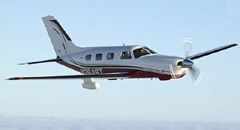
There is the new Piper Matrix which is an unpressurised Mirage. This is an interesting option for European airways flight, for pilots who are happy to use oxygen. But it has the same engine as the Mirage...
After that, one starts looking at turboprops:
The Jetprop is a Piper Mirage converted with a Pratt & Whitney PT6 turboprop front end
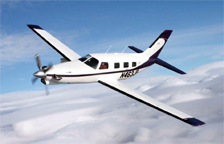
This does everything the Mirage does but with a more powerful and highly reliable engine, and the extra HP gives it a rapid takeoff and climb performance. Its 1999kg MTOW avoids the substantial enroute charges which are collected by Eurocontrol on behalf of the various countries through whose airspace you are flying. Most countries levy these only on IFR flights but a few charge for VFR also. Typically, one starts the job with a used Mirage and these can be had in various conditions depending on how much one pays. 1999 is a significant year, in which Piper reinforced the airframe. The later models use the KFC225 autopilot which is highly regarded as the best available, and for a mysterious reason they don't seem to suffer as many of the problems which the TB aircraft had with it. The Jetprop is universally bad-mouthed by Piper and Socata - just as one would expect. With some justification; it is a Piper after all so the build quality and strength doesn't compare with a TBM (or a PC12, etc) but a brand new Jetprop costs about 50% of a brand new TBM850... If I was seriously upgrading from the TB20, I would strongly consider the Jetprop.
I am informed that the Jetprop STC is not valid for G1000-equipped PA46 aircraft, which (if true) will eventually cripple its market potential. However, there are workarounds with modern avionics from Garmin; one discussion is here.
The Piper Meridian is also a Mirage with a PT6 engine but is an official Piper product. Unfortunately for European pilots it weighs around 2300kg and thus incurs the European route charges. There is a 1999kg STC available but the resulting massive payload loss makes it unairworthy just sitting on the ground with full tanks!
The Extra 500 is another turboprop but this time using a Rolls-Royce engine instead of the PT6. This is a new aircraft design. One article is here. Another one here. Update 7/2015: The rights have been sold to some Chinese firm, so this aircraft is probably dead now.
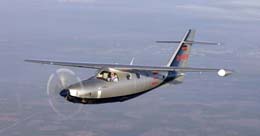
The above turboprops have an operating cost very (very) roughly 3 times greater than TB20/21-class pistons. They are 6-seaters but cannot carry much more than 2 if carrying full fuel.
For a further 2-3 times cost increment one can fly the much more capable TBM700/850/900
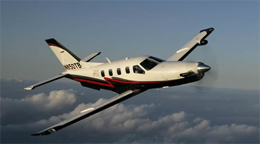
The TBM850/900 is a TBM700 with an uprated engine. These aeroplanes are probably 5x more expensive than a TB20 to operate and maintain but they offer a lot of mission capability, and used TBM700 prices have come down in recent years. One can get a good mid-1990s TBM700 for $1.2M-1.4M. The build quality of the TBM is excellent. I have flown a TBM850 and it is an awesome machine, with a performance gain of around 3x over a TB20 and that is just looking at a low altitude, but it remains very easy to fly.
This part of the market was going to get really interesting had the amazing all-composite Epic Dynasty entered production
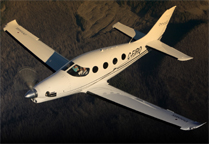
However, after a period of sales in the USA under their Experimental category - a novel approach which should have meant that the aircraft got debugged by "normal" pilots before it is sold as a certified model - they went bust in July 2009... This project had its origins in the "Farnborough Aircraft" project, later called Kestrel, which is still out there, slowly moving forwards. The Kestrel substantially outclasses a TBM850 in performance and would sell well if it was certified now.
The new light jets which always attract the media hype don't compare well with single engine turboprops when it comes to range and payload. However, all this is seriously big money - a whole different world from the TB20.
Miscellaneous Documents and TB Resources
1979: French
TB article
1981:
UK Pilot magazine article
1982: Aerospatiale magazine article
1984: Plane & Pilot TB Review
1985: TB leaflet
1986:
Plane & Pilot TB article
1991: AOPA Pilot
TB21 Review
1991: AOPA Pilot TB article
1992: TB leaflet
1997: TB
leaflet - showing a planned piston twin
2000: A US Flying magazine review
2000: A TB datasheet
2000: An early Socata TB20GT/21GT brochure
2000: TB GT leaflet
2000: UK Pilot Magazine article
2004: leaflet on a diesel TB
2004: Plane & Pilot TB Review
2011: Aviation Consumer article
2014: Aviation Consumer article, updated
2015: French
magazine article, also mentioning a TB restart attempt
English TB Type Certificate
French (DGAC) TB Type Certificate
EASA
Type Certificate (local
copy)
Warmkessel
I have a huge collection of avionics and other manuals which cannot be published on an open website but if you need anything, drop me an email.
Odd Bits
In 2011 I came across this interesting document showing an early TB aircraft prototype, with canards. It's amazing that Socata tried something as unusual as this...
Last edited 1st November 2025
Nothing in this article takes precedence over anything written in any Flight Manual / Pilot Operating Handbook, or over anything else published anywhere else whatsoever. Use this information entirely at your risk.
Any feedback, reports of dead links, corrections or suggestions much appreciated:
Contact details